
The world’s most expensive handbag was scratched, worn, and covered in remnants of old stickers.
In July 2025, Jane Birkin’s original Hermès handbag sold for €8.6 million at Sotheby’s Paris. Its black leather bore the marks of nearly a decade of daily use, its corners were worn, and its zipper no longer closed properly. By conventional resale standards, these imperfections might have diminished its value. Instead, they were part of what made it extraordinary.
This was not simply a Birkin. It was the Birkin, the original prototype created for the woman whose name would become one of fashion’s most recognizable symbols of wealth. Its previous life was inseparable from its desirability.
There is something revealing about an industry that can place such extraordinary value on an object precisely because it has already been owned.
Luxury has long celebrated the experience of acquiring something new: untouched leather, immaculate packaging, the ritual of the boutique. Secondhand, by contrast, has often carried associations with compromise, offering access to designer goods without the prestige of being their first owner. Vintage couture and collectible fashion have long had their admirers, but the cultural legitimacy of secondhand luxury is now extending well beyond specialist collecting circles.
From archival Jean Paul Gaultier to vintage Chanel and pre-owned Hermès, the growing fascination with archival fashion is blurring the distinction between new and previously owned luxury. For certain pieces, age is no longer something to overlook. Rarity, provenance, and historical significance can offer something even the most expensive contemporary purchase cannot immediately reproduce: a past.
And perhaps that is where the changing meaning of luxury begins. The growing fascination with archival fashion suggests that luxury is no longer defined by purchasing power alone. Increasingly, the knowledge to recognize a garment’s significance, the taste to appreciate its history, and the access to acquire it can become forms of cultural distinction in their own right.
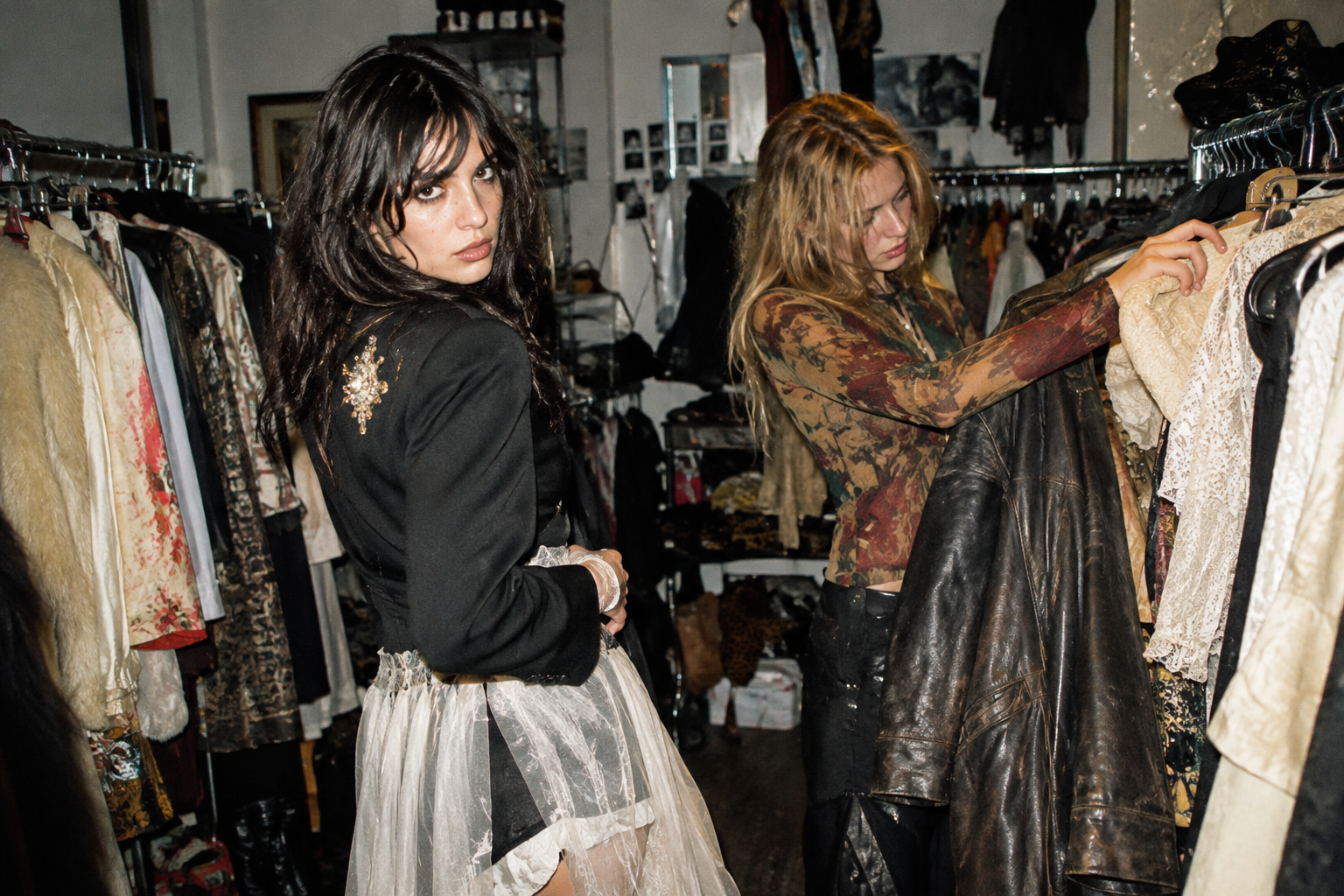
A newly purchased luxury object communicates the ability to acquire something desirable. An older object can suggest something else entirely: the appearance of having possessed it long before it became desirable again. Consider a contemporary Chanel handbag beside a vintage example that appears to have belonged to the same wardrobe for decades. The former might demonstrate purchasing power. The latter can evoke continuity, familiarity, perhaps even inheritance. It suggests a relationship with luxury that predates the current season. Whether that history is genuine is another matter.
A handbag purchased from a vintage dealer yesterday can be styled as though it has been passed down through generations. An archival jacket might evoke an inherited wardrobe even when its wearer has no personal connection to the era in which it was made. Secondhand luxury can therefore offer something beyond ownership: the appearance of longevity.
This is particularly interesting amidst fashion’s fascination with the visual codes of generational wealth. A conspicuous new purchase announces an acquisition, however, an older piece can suggest that its owner has never needed to announce one. There is a paradox in purchasing something precisely because it appears as though it was never purchased at all.
Of course, inherited wealth cannot be reliably identified by someone’s wardrobe, nor does every vintage purchase aspire to communicate it. Yet the association reveals something about the language of contemporary status. An object that appears to have existed within a person’s life for years can communicate a different kind of privilege from one acquired yesterday.
Time has always been associated with wealth. The freedom to enjoy leisure, preserve possessions, and accumulate collections across generations has long distinguished those with resources from those without them. What secondhand luxury reveals is another way of making those associations visible.
In a culture accustomed to immediate access, an object with an irreproducible past offers a form of distinction that newness cannot manufacture. But time enters the equation in another way: through the pursuit of the object itself.
The Luxury of the Hunt
For some collectors, the pursuit of archival fashion involves months of searching, researching, and cultivating relationships with specialist dealers. The pleasure lies not only in possessing the garment but in discovering it. Vintage dealer Alexis Novak, founder of Tab Vintage, offers a revealing example.
When model Behati Prinsloo requested a coveted Jean Paul Gaultier Cyber Dot mesh dress, Novak began searching through Instagram, tracing images and contacting potential owners. She eventually located someone who possessed the dress but was unwilling to sell. That person connected her with another owner who was, allowing Novak to acquire the piece. The transaction depended on more than purchasing power. It required persistence, specialist knowledge, and access to a network that no conventional boutique could replicate. The ability to navigate those circles, cultivate connections, and know where to look reflects a particular kind of savoir-faire; one rooted in cultural knowledge and social capital that money alone cannot guarantee.
The glamour of archival fashion can conceal the labour behind it. In a 2025 Vogue profile, Novak described arriving at estate sales at four in the morning, prepared to search through piles of clothing for overlooked treasures. This is where the vintage curator becomes more than a reseller.
Curators identify historically significant garments, understand their original contexts, and reintroduce them to contemporary audiences. Their expertise can transform an overlooked object into something newly desirable. In an economy increasingly organized around convenience, this kind of pursuit offers a different relationship with consumption. The satisfaction is partly in finding something that cannot simply be ordered in every size or purchased from the nearest boutique. In The Theory of the Leisure Class (1899), economist Thorstein Veblen described leisure as the “non-productive consumption of time.” More than a century later, the pursuit of archival fashion offers an intriguing variation on his theory: in a world where almost anything can be purchased instantly, the ability to devote time, knowledge, and connections to finding what others cannot may be the greater luxury.
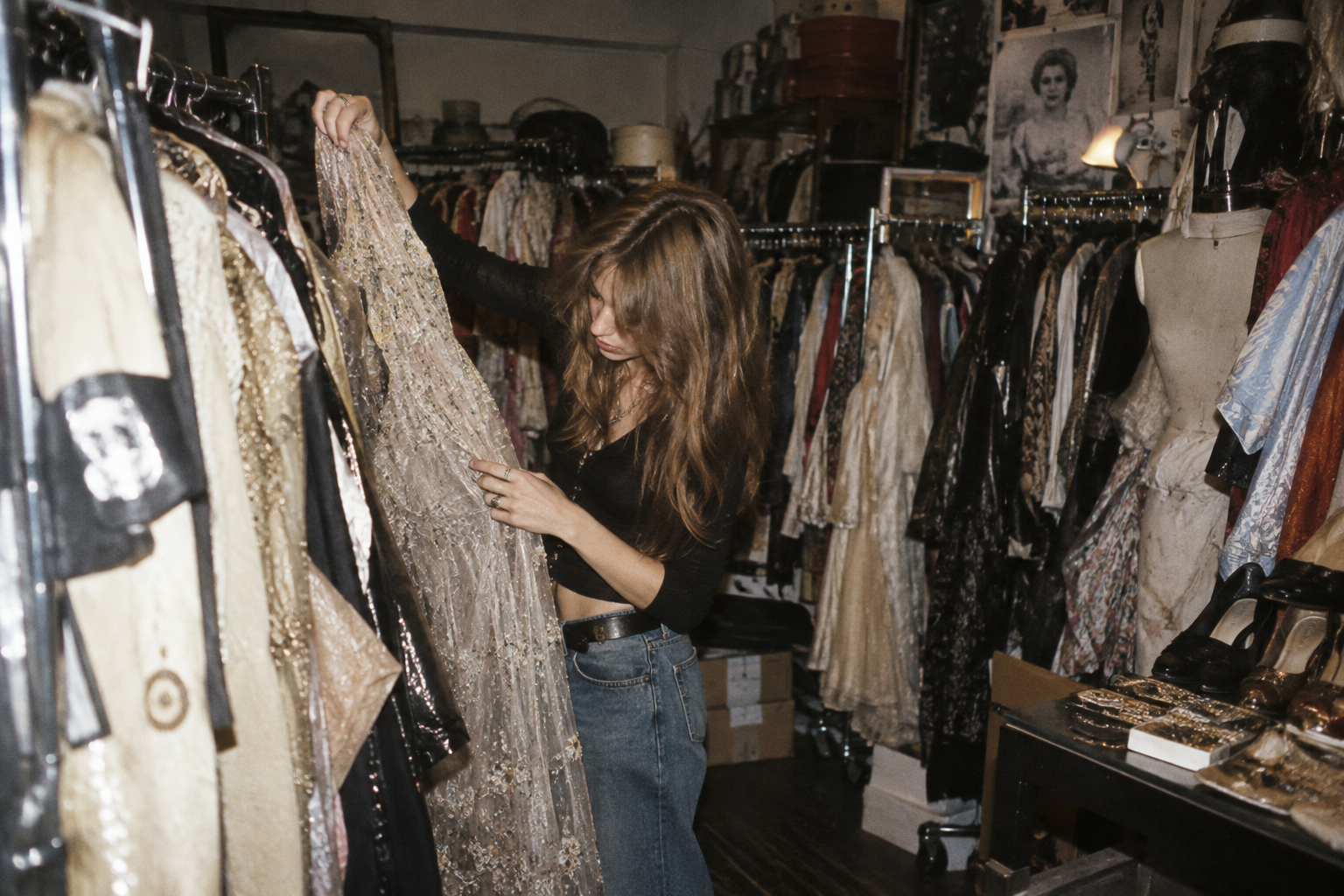
Yet the hunt should not be romanticized. For many consumers, secondhand shopping is an economic necessity rather than a leisurely pursuit. And affluent collectors can outsource the search to specialists whose expertise has taken years to develop. Perhaps the privilege lies not simply in having time, but in having control over it—or the means to access knowledge someone else has spent years cultivating.
In this sense, secondhand luxury can communicate two forms of accumulation: the history carried by the object and the knowledge possessed by the person who recognizes its significance.
Moreover, a recognizable designer logo communicates prestige to a broad audience, this after all is the cornerstone of the luxury market, however, an obscure archival garment may communicate something more specific to a smaller one.
A piece from Tom Ford‘s tenure at Gucci, for example, can signify an appreciation for a particular creative period rather than simply the house itself. Similarly, a collector searching for Phoebe Philo-era Céline is pursuing a distinct design vocabulary associated with a particular moment in fashion history.
Recent resale data suggests that this specificity matters to a growing segment of shoppers. According to The RealReal‘s 2026 Resale Report, demand for vintage fashion on its platform has risen 432 percent since 2020. Saved searches for “Phoebe Philo Celine” increased 650 percent year over year, while those for “Nicolas Ghesquière Balenciaga” and “Marc Jacobs Louis Vuitton” rose 400 and 375 percent, respectively.
These figures reflect activity on one resale platform rather than the luxury market as a whole. Nevertheless, they illustrate how precisely some consumers are searching fashion’s past.
The designer’s era has become part of the object’s desirability. In his 1979 work Distinction, sociologist Pierre Bourdieu examined how taste and cultural knowledge participate in the formation of social hierarchies. Within fashion, recognizing a collection, understanding its historical context, or appreciating an obscure reference can similarly communicate familiarity with the codes of a particular cultural world.
Money may buy the garment. Knowing why it matters is another kind of currency. This does not mean archival collectors inherently possess better taste than contemporary luxury consumers. Knowledge can be genuine, acquired through years of curiosity and engagement, but it can also be performed. A historically significant garment can be purchased simply because it has become fashionable.
Still, the distinction is revealing. If everyone recognizes the logo, knowing the reference may become the more exclusive form of recognition. Is archival fashion, then, the new logomania?
Archival Fashion: When Luxury Rediscovers Its Own Past
The growing prestige of previously owned fashion has not gone unnoticed by luxury houses themselves. In 2021, Gucci introduced Vault, an experimental concept that included vintage Gucci pieces selected by the house’s archivists and reconditioned by its artisans. Each piece was individually numbered and presented as a one-of-a-kind object.
Gucci’s descriptions of its vintage selection acknowledged marks, creases, and abrasions as characteristics of a garment’s individual history rather than imperfections to be erased.
Valentino took another approach through Valentino Vintage, inviting owners to exchange historical Valentino garments for store credit. In 2022, the house brought previously owned pieces into specialist vintage boutiques in Milan, Tokyo, New York, and Los Angeles, giving earlier collections renewed commercial visibility. These initiatives reveal an intriguing reversal: houses whose businesses depend on the desirability of new collections have found renewed value in garments they previously produced and sold.
Fashion has always drawn inspiration from its past. But there is a distinction between recreating a historical design and recognizing the desirability of the original object itself. An archival garment belongs to a particular creative moment. Its cultural significance can evolve as designers are reassessed, collectors rediscover forgotten collections, and changing tastes give earlier work new relevance. The archive becomes more than a record of what a house once produced. It becomes a cultural and commercial asset whose value can continue to develop long after the original sale.
A New Kind of Exclusivity
The growing market for archival fashion and secondhand luxury presents a contradiction. Resale platforms such as Vestiaire Collective and The RealReal have made previously owned designer fashion easier to discover. Consumers can explore discontinued collections, search for particular designers, and sometimes acquire luxury goods for less than their contemporary equivalents.
What was once perceived as a compromise can now represent a deliberate expression of personal taste. Yet greater accessibility does not necessarily eliminate exclusivity. It may simply change what makes something exclusive. A rare archival garment cannot be made more available simply because demand increases. Its supply depends on what was originally produced, what has survived, and what existing owners are willing to sell.
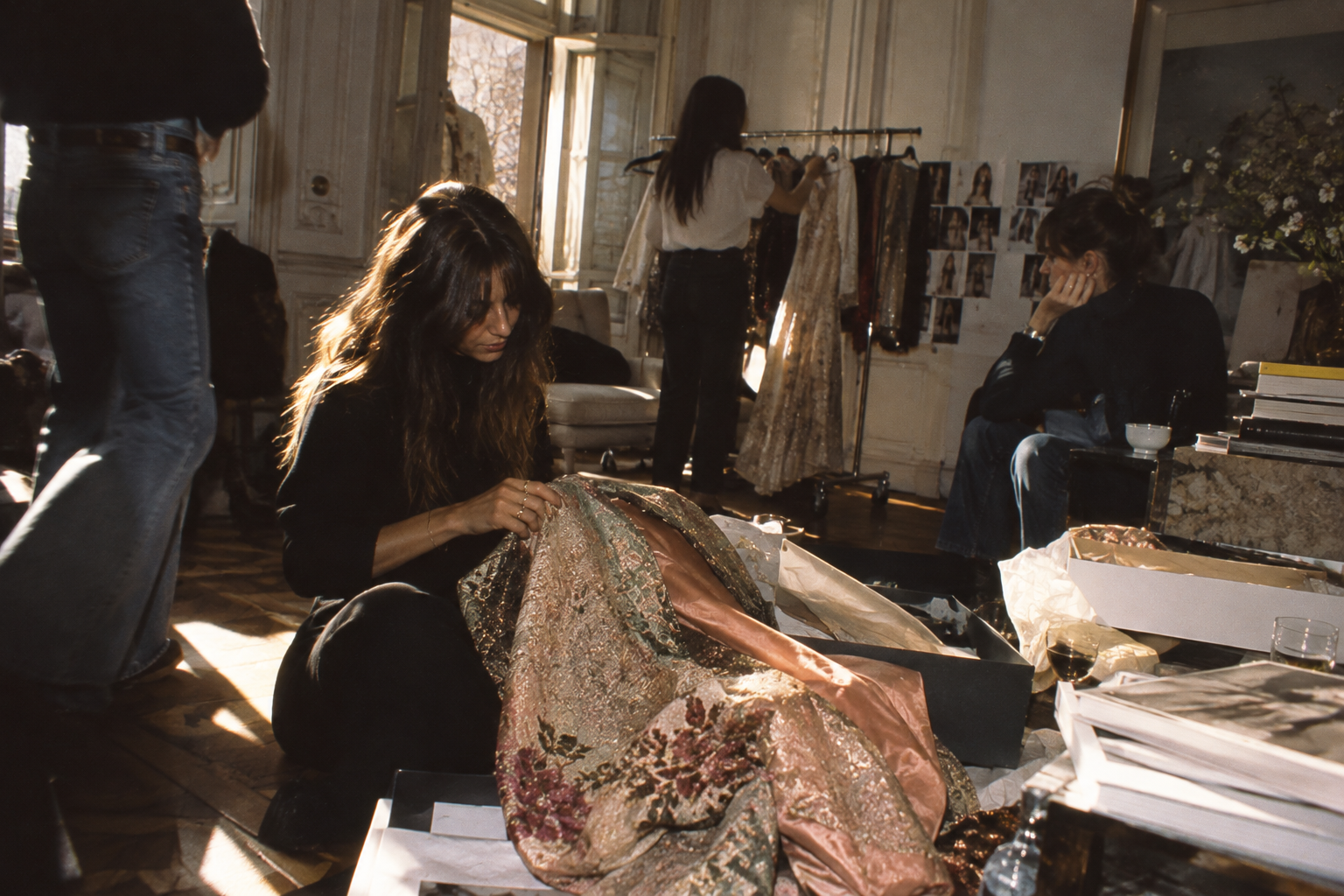
Knowledge creates another distinction. Recognizing an unusual piece, understanding its provenance, and knowing where to find it require familiarity with a world that can remain difficult for outsiders to navigate. The result is a market that broadens access to luxury while simultaneously creating new hierarchies of taste.
Economic capital still matters, to be sure. Exceptional archival pieces can command substantial prices, and specialist expertise comes at a cost. But purchasing power alone does not necessarily confer the cultural knowledge associated with recognizing a historically significant garment, or its associated reference. Nor does an appreciation for vintage fashion necessarily represent a rejection of status. As collectors, stylists, and curators direct attention toward particular archival designers, once-obscure pieces can become coveted symbols themselves. Perhaps secondhand luxury is not dismantling traditional status hierarchies. Perhaps it is making them more subtle.
Jane Birkin’s original handbag was an extraordinary exception, not evidence that ordinary wear increases an object’s value. Its imperfections mattered because they belonged to a documented history that could never be reproduced. Yet that distinction captures something essential about the evolving prestige of previously owned fashion. A new object can offer craftsmanship, beauty, and exclusivity. An old one may offer those same qualities alongside something less easily acquired: the evidence of a life already lived. In an industry accustomed to asking what comes next, perhaps the more interesting question is what deserves to remain. And in a culture where almost anything can be purchased, the ultimate luxury may be possessing something whose history cannot be bought new.
 Massara Bethoon is a Canadian lawyer and fashion writer exploring the intersection of luxury fashion, intellectual property, branding, and culture. Her writing examines how creativity becomes commerce, how brands shape cultural identity, and the legal forces influencing the fashion industry. She has a particular interest in Canada’s fashion and creative industries.