

Every fashion capital has its mythology. Paris has couture, Milan its polished sensuality, London its collision of heritage and the avant-garde. Copenhagen has built an internationally legible language around minimalism and sustainability. These identities are never as coherent as they appear from elsewhere, but they offer each city a recognizable position within fashion’s global imagination. Montréal is more difficult to compress, but its history of savoir-faire and its rich ecosystem of production and independent labels is surely a start.
“There is no single, easily identifiable Montréal aesthetic, and that is precisely what makes the city so unique,” says Gautier Berlemont, deputy director of mmode, the Montréal Fashion Cluster behind Semaine Mode de Montréal. “There is a sense of freedom and openness that allows different identities, generations and communities to coexist.”

For Berlemont, Montréal’s fashion identity resides less in a dominant silhouette than in the city’s capacity to absorb and transform different aesthetic, material and cultural languages. Each generation inherits a set of references from the last, but never leaves them intact. The result is a fashion culture defined by continuity and reinvention, with influences that remain recognizable even as they acquire what he calls “a distinctly Montréal twist.”
Rather than resolving this multiplicity into a convenient visual identity, the sixth edition of Semaine Mode de Montréal is placing it at the centre of its program. Taking place from September 21 to 27, the week moves across the city through more than 40 events spanning runway presentations, exhibitions, workshops, panels, studio visits, retail activations and community gatherings. The result is less a temporary map of how clothing is imagined, manufactured, circulated, preserved and worn in Québec.
“Montréal is a mosaic of creativity, perspectives and savoir-faire,” Berlemont says. “We believe it is our shared responsibility to showcase and celebrate that richness.”
That responsibility feels particularly pressing now. Despite its place within Québec’s cultural and economic history, Berlemont believes the province’s fashion sector has become less visible within the public conversation. Designers may provide its most recognizable faces, but the industry also encompasses manufacturers, textile specialists, retailers, educators, artisans, cultural organizations and the technical workers whose expertise makes the production of fashion possible.

“The businesses, designers, manufacturers and organizations that make up this ecosystem deserve to be seen and recognized,” he says. “Québec has an incredibly diverse and knowledgeable fashion community, with a unique savoir-faire and a wealth of creative and manufacturing expertise that deserve to be showcased.”
The renewed international attention surrounding Montréal provides some evidence of that expertise. Première Vision chose the city for its first Canadian textile trade show in 2025 and returned in 2026, while the Canadian Arts and Fashion Awards has also brought major programming to Montréal. For Berlemont, the arrival of internationally recognized institutions represents more than a series of prestigious events. It suggests that Montréal’s creative and manufacturing capacity is beginning to command attention beyond Québec.
Première Vision identifies the province’s fashion and apparel sector as contributing $10.2 billion to Québec’s GDP and supporting 93,500 direct jobs. Those figures complicate the persistent idea of local fashion as a marginal creative scene. They describe an industry with meaningful economic weight, even if its cultural contributions remain inconsistently recognized.
Semaine Mode de Montréal is intended to make that largely dispersed system visible. Berlemont describes the event as a “megaphone,” capable of amplifying the work of its participants while helping the public understand the depth, diversity and value of Québec fashion.
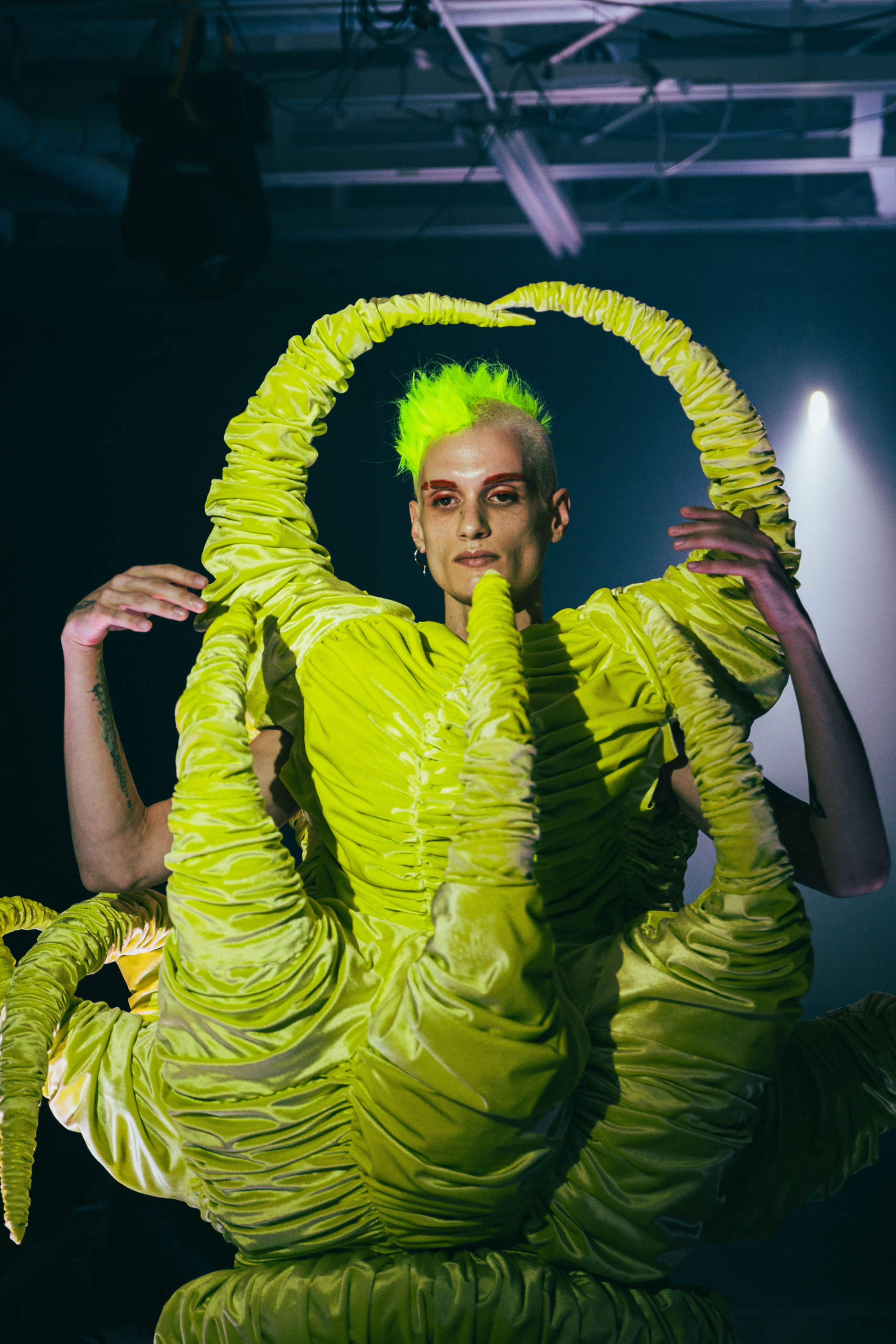
This year, however, that amplification is being pursued through a markedly more selective program.
In 2025, SMM encompassed more than 100 events. For 2026, the organization introduced an open call, a selection committee and a set of curatorial criteria, substantially reducing the calendar while concentrating attention around fewer projects.
“After several years of consultations with our partners, members and the broader fashion ecosystem, we gathered the feedback and recognized a strong desire for a more curated approach to programming,” Berlemont explains. “The goal was not simply to create more opportunities for visibility, but to give each project greater space and impact, while making the overall programming easier for the public to understand and engage with.”
Applicants were asked to propose specific projects that could contribute to the broader fashion community while drawing attention to a particular form of craftsmanship or knowledge. The ambition was to give each participant enough space to build momentum around their work, engage their existing audiences and reach new ones without becoming lost within the scale of the calendar.
It represents a subtle but important change in how SMM understands visibility. More events do not necessarily produce greater recognition, especially when audiences lack the time or context required to meaningfully encounter them. Curation becomes a way of making the ecosystem legible.

That proposition can be seen throughout the week. At the École supérieure de mode de l’UQAM, a panel on the right to repair asks why garments are not designed from the outset to be altered, disassembled and returned to circulation. The conversation will address modular construction, interchangeable components, tailoring-friendly finishes, secondhand economies and the responsibilities designers assume for the complete lifespan of a garment. Repair, in this formulation, is not a corrective measure applied after clothing begins to fail, but a fundamental design principle.
Elsewhere, fashion becomes a means of thinking through history. Inside the chapel of Notre-Dame-de-Bon-Secours, La fibre en mouvement brings contemporary organ music into contact with traditional fibre processing, rarely displayed textile artifacts and new work informed by the dress histories of New France and Acadia. The event connects contemporary making to the knowledge contained within fibre, technique and place, while a collaborative knitting initiative situates textile practice within the realm of community action.
At the Musée McCord Stewart, Résonances : des racines entremêlées will explore the relationships among fashion, culture and identity through an evening devoted to Afro and Indigenous creative practices. Runway presentations and performances locate clothing within histories that extend well beyond seasonal trend cycles, treating dress as a carrier of memory, cultural continuity and collective self-representation.

The designer presentations similarly resist a single format. Golden Goddess will devote two evenings to different lineups of emerging Montréal designers. Maison Joakim will occupy a former gallery with its SS26 collection, vintage furniture and objects from the 1970s and ’80s, creating an inhabited interior in which clothing becomes one part of a broader material environment. At ON SHOW, produced by LIGNES DE FUITE, the boundaries separating gallery, atelier and runway become unstable. Among its presentations, EXPOSÉ will approach clothing as an architecture that reveals tattooed skin, placing fashion in conversation with contemporary art and tattoo culture.
Runways remain part of the week, but they no longer function as its sole organizing principle. Alongside them are historic tours, exhibitions, workshops, collection launches, conversations about circularity and events centred on independent retail and community-building. More than 35 participating activations, Berlemont argues, offer audiences more than 35 different ways of entering Québec fashion.
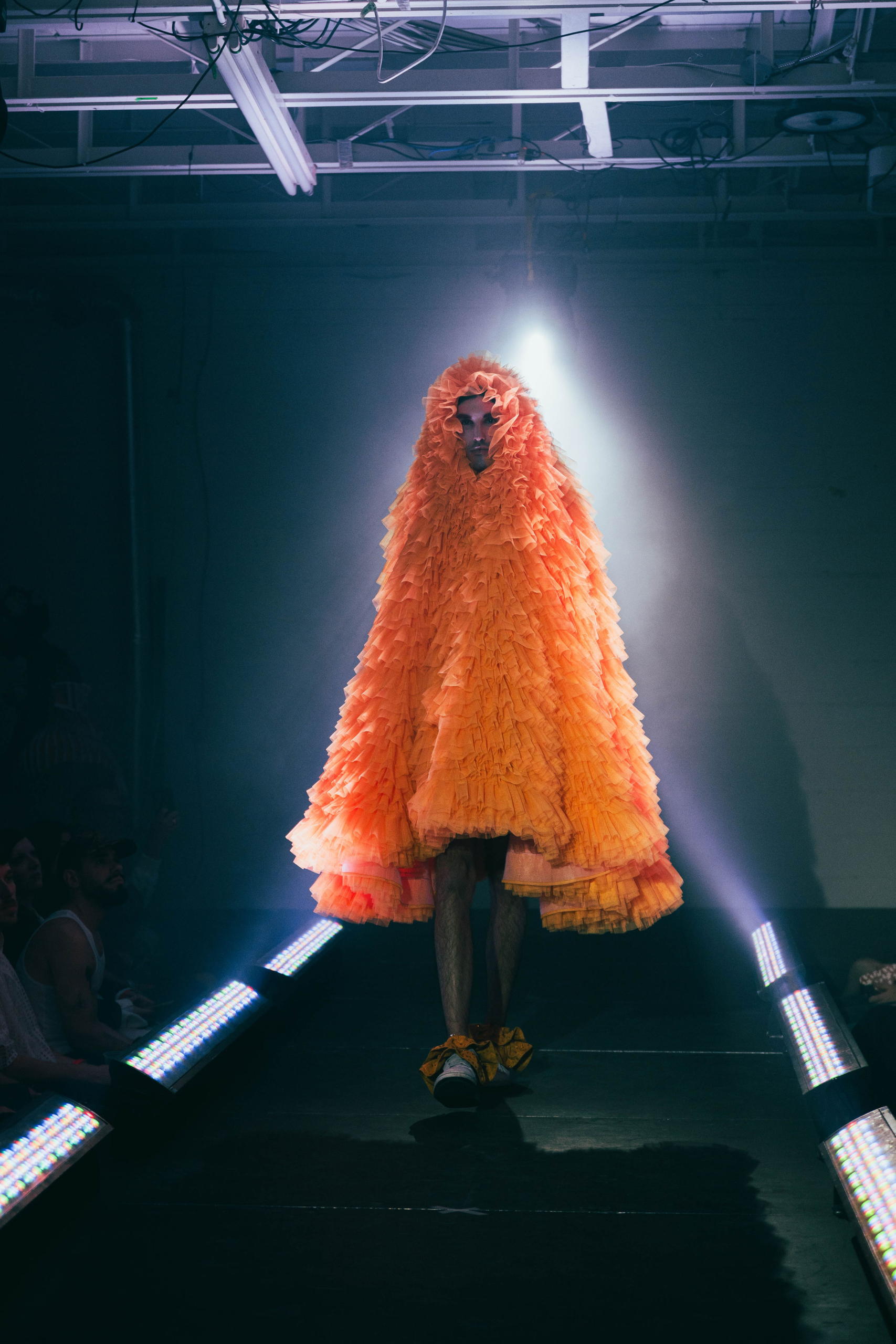
“Each activation represents a different piece of the fashion mosaic that is Montréal,” he says. “Together, they reveal an ecosystem that is diverse, multifaceted and constantly evolving, where different generations, practices, perspectives and savoir-faire can coexist, intersect and inspire one another.”
The emphasis on diversity extends beyond aesthetic representation. It includes the many scales at which fashion operates, from an individual artisan or emerging designer to an established manufacturer, museum or educational institution. It also allows SMM to place thriving local companies alongside discussions of the structural pressures confronting the industry.
“There has been a strong tendency to focus on the challenges and negative aspects facing the industry,” Berlemont says. “While these realities deserve to be acknowledged, there are also numerous businesses and brands that are thriving, growing and contributing to the strength of our fashion ecosystem.”
Those challenges are considerable. Tariff pressures and wider economic uncertainty have made it increasingly important for manufacturers and brands to diversify their sourcing, production and markets. Independent designers continue to struggle for recognition as cultural producers, while businesses across the sector must adapt to changing expectations around circularity, environmental responsibility and innovation. Even for successful local brands, visibility remains essential to reaching customers and generating sales within Québec.

SMM cannot resolve those pressures over the course of a week. Berlemont instead positions it as the public-facing expression of work that continues throughout the year. The Montréal Fashion Cluster supports designers, manufacturers and organizations through research, strategic guidance, government-funding navigation and initiatives focused on entrepreneurship, workforce development, innovation, export, circularity and environmental responsibility.
The long-term goal is to establish Semaine Mode de Montréal as both a platform and a mark of recognition, one that can communicate the strength of the sector not only to the public, but to governments and other decision-makers responsible for its future.
“Montréal Fashion Week can be an important tool in addressing some of these challenges,” Berlemont says. “It can act as a megaphone, amplifying the voices of our ecosystem and allowing the public, different levels of government and local decision-makers to see the vibrancy, diversity and expertise that exist within our fashion community, and to better understand why this ecosystem deserves support.”
Support, here, also means participation. Berlemont points to a growing pride in wearing Québec brands, visible across clothing, jewellery, handbags and accessories. Circular-fashion communities are expanding alongside renewed interest in upcycling, secondhand clothing and archival pieces from recognizable Québec and Canadian labels. Denim remains embedded within local fashion culture, while vintage leather and fur are being recirculated and recontextualized rather than simply discarded.

These practices do not amount to a single Montréal look, but they do suggest a shared orientation: a willingness to preserve what already exists, reconsider how clothing is valued and locate fashion more closely within its surrounding community. The localism being proposed is not merely geographical. It is a relationship among maker, wearer, material and place.
That may ultimately be the most compelling answer to the question of Montréal’s fashion identity. If Paris, Milan, London and Copenhagen are understood through a set of recognizable visual codes, Montréal’s defining code may be its resistance to aesthetic consolidation. Its identity has emerged through the coexistence of competing influences, different generations and multiple understandings of what fashion can be.
“What makes Montréal’s fashion ecosystem truly distinctive is its diverse cultural and social fabric,” Berlemont says. “This richness brings together a wide range of visions, perspectives and approaches to fashion, creating an environment where designers and businesses can experiment, evolve and thrive.”
Within that environment, collaboration is more than an attractive cultural value. It is part of the infrastructure that allows independent fashion to survive. Communities share knowledge, create opportunities for one another and help forms of expertise travel between designers, institutions and generations. The capacity to support one another, Berlemont argues, is itself one of Montréal’s greatest strengths.
Semaine Mode de Montréal is therefore operating as both celebration and argument. Its program proposes that the value of Montréal fashion cannot be measured solely by the visibility of its runways or the ease with which its aesthetic can be translated abroad. It also resides in a garment designed to be repaired, a textile technique passed between generations, a manufacturer adapting to a changing market, an independent label finding a temporary stage or a museum treating dress as a site of living cultural memory.
“Montréal and Québec fashion is not linear,” Berlemont says. “It is wild, creative, unexpected and unique. It deserves to be discovered, celebrated and seen.”
The task for audiences is not only to look. Berlemont wants them to wear Québec fashion, buy it, discuss it and help it travel beyond the province. Visibility can introduce a designer to a new public, but recognition becomes meaningful only when it develops into material support.
Perhaps that is Montréal’s most recognizable code after all. Not a single look that can be easily packaged and exported, but a fashion culture shaped by mixture, adaptation and the refusal to separate clothing from the communities and systems that bring it into being. This year, Semaine Mode de Montréal is not attempting to impose order on that complexity, rather, it is asking the city to recognize it, participate in it and help sustain it.
Explore the complete Semaine Mode de Montréal 2026 programme.

Cody Rooney is the Editor in Chief and senior contributor at liminul.
He is a PhD candidate, digital content specialist, writer, editor, multi-media artist, and photographer.