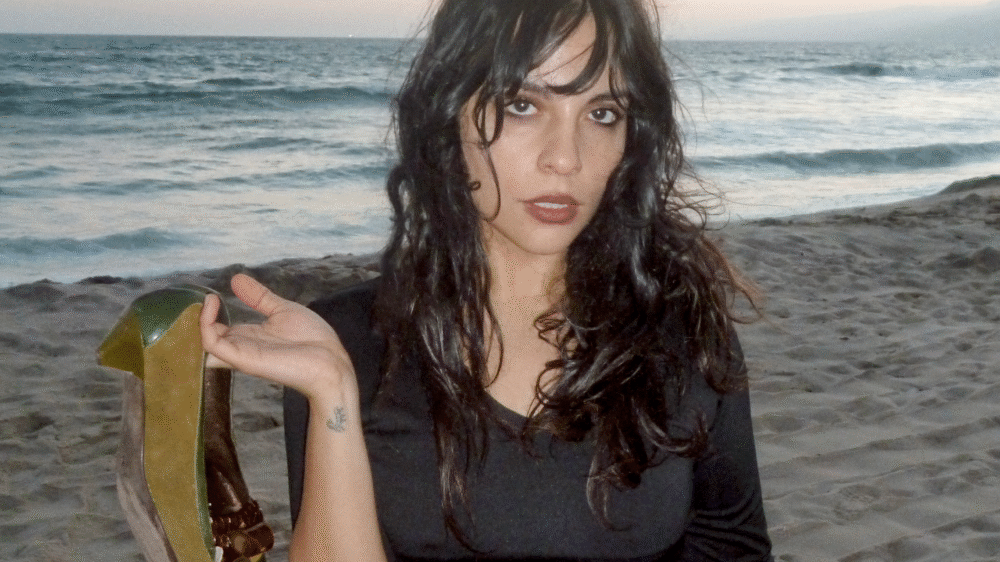
Mexico City’s Girl Ultra is a master of adapting her environments into inspiration. Born as Mariana de Miguel, the Girl Ultra catalogue melds genres, textures, and dialects to translate the truest reflections of herself to her listeners. Her music is produced with fearlessness and freedom, and her latest album RRRomeo is no exception.
Released October 9th, the album explores romance and rebellion – playing into stories of the lustful chaos de Miguel has found over the course of her life in Mexico City. Produced alongside Dave 1, Chromeo, and P-Thugg, RRRomeo transforms de Miguel’s personal experiences into a cinematic journey; pinpointing the project to an overarching genre doesn’t do it justice. Synths, Arabic samples, fuzzed-out guitars, and Andean flutes collide into an album that is simultaneously familiar yet foreign.
Girl Ultra continues to welcome these unexpected musical trajectories in her career. Despite gaining traction as an R&B artist 10 years ago, naturally pivoting towards sounds that inspire and excite her will always be the destination. De Miguel approaches artistry in similar ways to sexuality – open, curious, and fully liberated. While her former blush EP looks inward at personal sensuality and desire, RRRomeo brings that passion outward. Ahead of the album’s release, Girl Ultra maps out the long-haul process that brought RRRomeo to fruition.
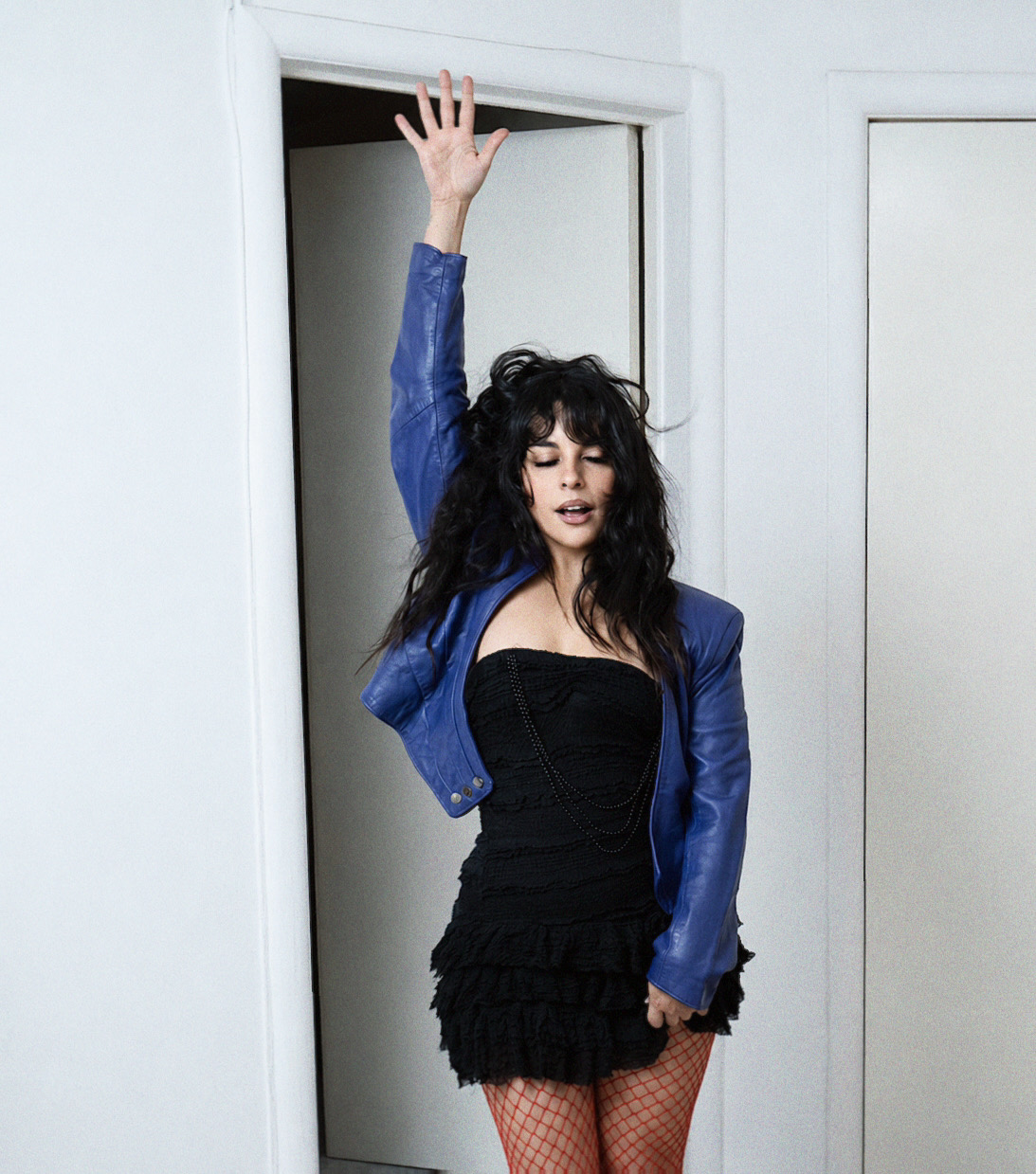
When I interviewed you last year for the blush EP, I asked what you were looking forward to and you mentioned working on an album with friends that had been “slow-cooking” before EL SUR and blush. Is RRRomeo the album in question? What did the process look like?
It’s the first time that I’ve breathed out a project for so long, let it marinate, and actually understand how it’s gonna age in terms of the sound, the narrative and where it was going. It never truly changed directions since it started; it consumed all the ideas between everyone that is involved. It was trying to find a middle ground of where EL SUR was going towards and trying to find my truth within sound and also just trying to get the best out of what I admire about Chromeo’s sound. That was mainly the process of doing this album. It was funny because it was a lot longer, and it was a privilege to see in real time how it was aging. Also, it’s very hard in this reality to be able to finish the music, have it come out in a couple months, and you’re still very excited to listen to it over and over again.
This album feels like a love letter to Mexico City in many ways from all the personal stories, relationships, music, and coalescence of cultures you’ve experienced there. It seems like you were able to really hone in on how it’s influenced you since the last time I asked you about it. You mentioned it influenced you in many good yet problematic ways. What were some of those problematic ways, and have those shifted into something more beneficial to you in the grand scheme?
It’s chaos. I grew up in the chaos and I got really used to it. I feel like that part is always inside my framework, I always revisit some stories that have come in and out of my life in Mexico City that have to do with all of the mess that goes around. As I grow up as an artist and adult, I try to find peace within it. Coming to Mexico City to actually find the sounds, then being able to go to L.A. and New York to record there and make music in other places that weren’t my hometown brought up Mexico City gritty girl in me a lot more. I was just trying to bring her everywhere. I definitely [fell in love with Mexico City] in a more adult way. It is a very PDA city. [The album] has been very tied to how I’ve been living in the city for the past couple of years – the romantic, slutty side of it.
Last time we chatted about the blush EP, we touched on navigating sexual liberation without fear or restraint. How has your personal approach to embracing love, lust, and sensuality evolved since blush? In what ways do you see a difference in yourself and connection to femininity since then?
blush was a manifesto on sexuality and on self-image itself, in a more personal way – like how I portray myself. I feel like for RRRomeo, ideas developed into more on how that commutes with the rest of my relationships in the world and how I perceive sexuality outside. So it’s more fun. I was just trying to build all of these up in blush and I feel like RRRomeo is just the kinkier side, the fetish of man, the kiss, or the friction, you know?
In an era where culture seems to be obsessed with revival narratives, how do you aim to position yourself as an artist to be referenced rather than pigeon-holed into a specific, pre-existing moment?
Us modern humans, we really like to know what we’re gonna eat. We’re addicted to tags and hashtags and asking “What is this? What is that?” I’ve strived for vanguard since I was a very young artist. To me, my process and how I frame things is very messy. I have a lot of references, and I just want to put them all into one blender and see what monster comes out of it.
I just try to fulfill my needs of sound and experimentation, and definitely in this album, there’s some reminiscence of the 80s, the synth fetish, and a lot of Arabic sampling and sounds that bring me back to all of the new wave era. The 80s were a sucker for Middle Eastern music. So I don’t know, I feel like this universe can be together in a room and create something, but probably it’s just gonna be tagged as “Oh, it sounds like the 80s,” and that’s it. You gotta just play with it. You can give any names to whatever you’re doing in your head, and nobody will care. In Mexico, we have this – I call it a bad habit, but maybe it’s not; where it’s like “This is the Mexican Charli XCX,” or “This is the Mexican Addison Rae,” and it’s an easier way for the consumer to understand. But I feel like it’s damaging to whatever proposition is being put on the table. Younger generations love to do that.
A lot of the younger generation enjoys finding likeness rather than allowing something to exist and be unique. But at the same time, the younger generation craves for something unique. It’s almost like they’re doing the exact opposite of what they want.
It’s interesting to witness. Fortunately, I still had the chance to grow into my adolescent years without a screen, maybe just the PC and music without knowing what I was gonna listen to. Sometimes albums didn’t even have the cover. Even though I really think music is really tied to image, video, and lifestyle, it used to be more of a task to discover. You had very little content from every artist. Right now, I feel like image is a little bit more on the focal point of consuming music.
It used to be that every song that you downloaded was a token, every CD you bought. There was some pride in owning something and of being a collector. Right now it’s just too much. Everything’s ours. Everything’s out there. It’s interesting to see how we consume music nowadays and how we as musicians relate to that.
How do you personally express authenticity, and find presence in an age where everything almost seems like a reference or is rooted in nostalgia?
I’m a sucker for nostalgia, but I just do whatever I please. It’s the only way to stay true.
Without really knowing what the result will be, or which target it’s gonna hit, I just try to pursue my need of blending sounds and, and trying to find that kind of chemistry in the studio. Being aware of your surroundings is good, but I do it in a little bit of a selfish way. I do it for myself.
Finally, if you had to reflect on everything we’ve discussed, how has it allowed you to build your own definition of what success looks like?
To me, success is having a final master in your files, and just being able to live out of that file and pay rent. It’s more simple. Success within music and making records is trying to find new voices of myself in them. This was a very full circle album for me, just working with a duo that I grew up listening to when I started going out in Mexico City and being able to find dialogue within the studio and learn from them. Finding a different voice, and as a 30 year old woman, being as explicit as possible. That to me was a success in terms of making this record specifically, and everything that brought me here. Being able to make art and make music in this crazy, current world is beautiful.
Izzy Petraglia is a publicist, writer and photographer based in Toronto. Within her work, she loves to tie in her passion for music, fashion, and pop culture. Follow her on Instagram.