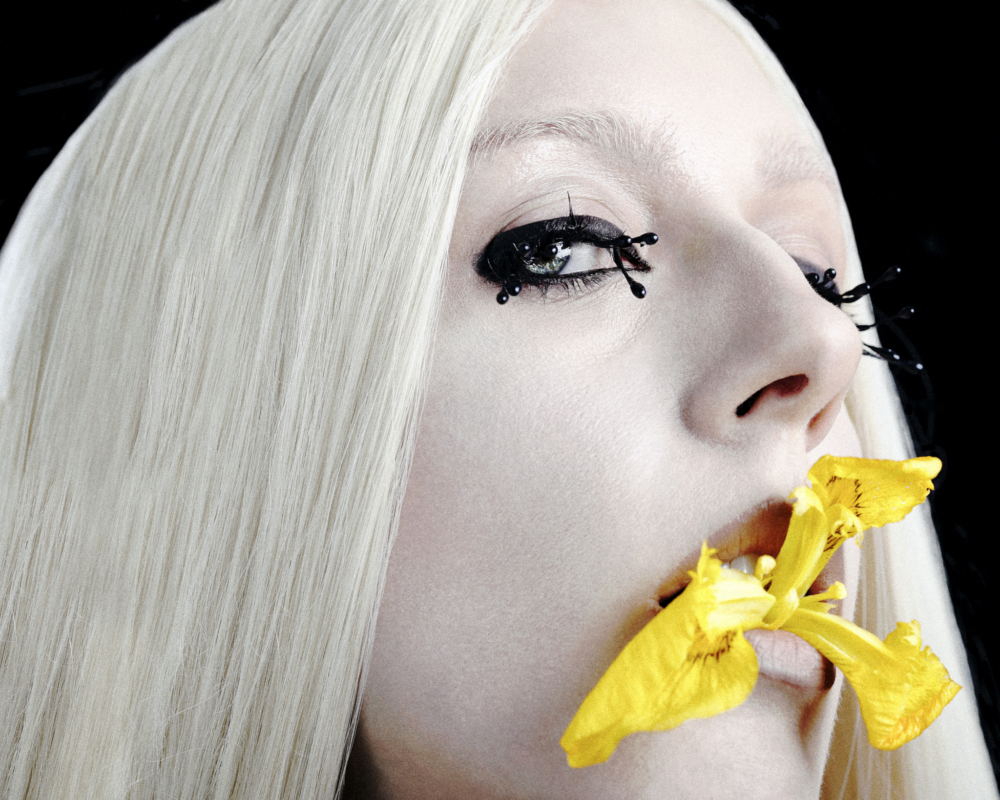
There is a peculiar kind of movement that belongs only to the night. It reveals itself in headlights cutting through rain-soaked streets, in trains rattling beneath sleeping cities, in bodies slipping between dance floors and sidewalks long after midnight. The city never appears fully at rest, only momentarily paused before accelerating once again. It is within this restless landscape that Rare DM‘s second album, Attention, unfolds. Cars idle in traffic. Lovers disappear into crowded rooms. Conversations dissolve into silence. Every destination feels temporary, every encounter suspended somewhere between intimacy and anonymity.
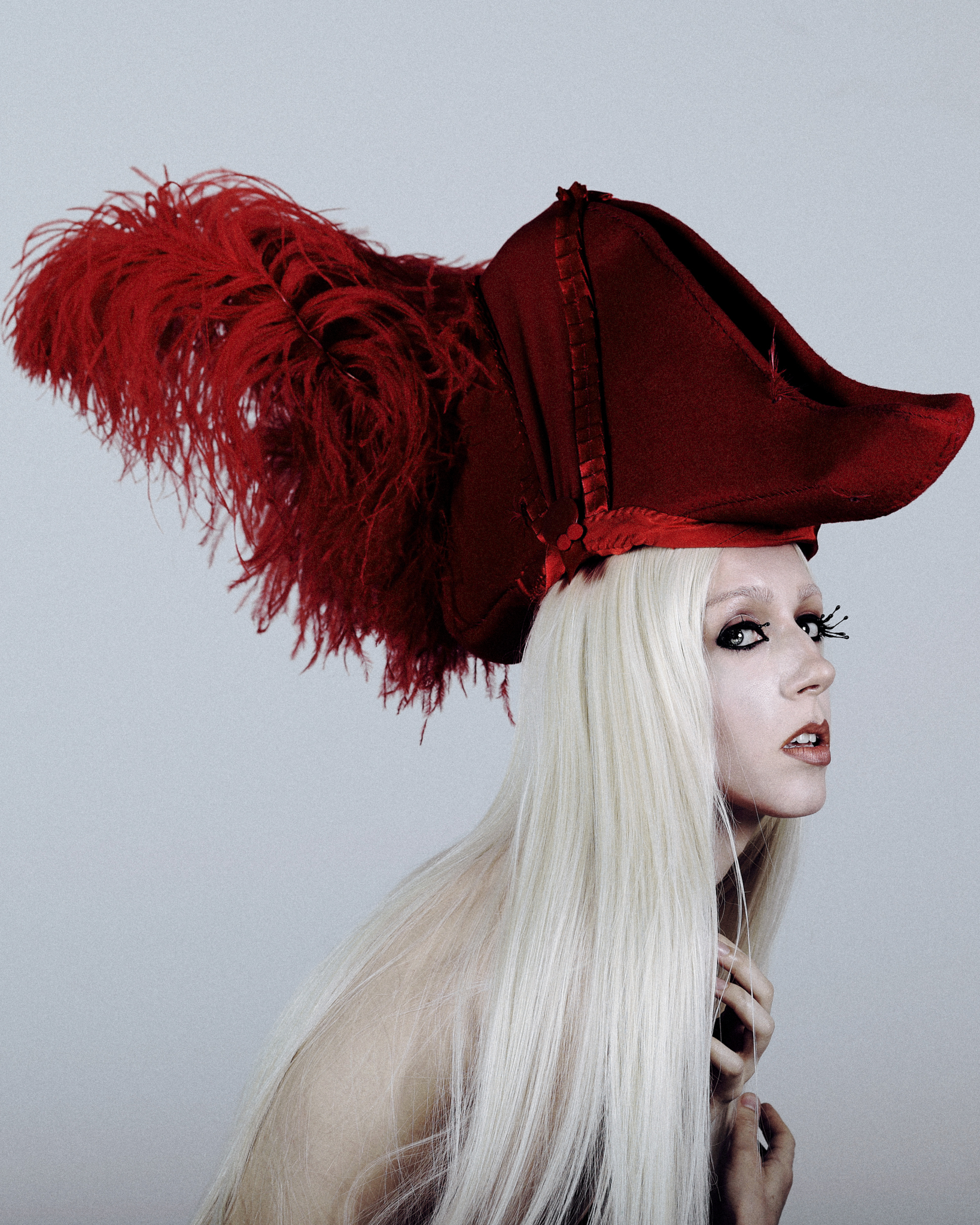
Movement is one of Attention‘s quiet obsessions. Not simply physical movement, but emotional movement, social movement, the perpetual circulation of desire through cities, clubs, relationships, and digital space. The record rarely settles into domestic interiors. Instead, it exists in transit, tracing the strange choreography of contemporary life where attraction, performance, loneliness, and recognition are constantly negotiated. Listening to the album, I found myself returning less to individual songs than to recurring images: engines revving beneath overpasses, traffic inching toward nowhere, dance floors illuminated by strobing lights, bodies perpetually arriving and departing. When I mention this to Rare, she laughs before confirming the intuition. “I’ve written so much music while in motion. I write on my bike, in cars, on trains, while dancing. My best lyrics are created in transit.”
That sense of propulsion extends far beyond the music itself. Over the past several years, Rare DM has quietly transformed from a songwriting project into an expansive multidisciplinary practice. Producing her own records, directing and editing videos, collaborating closely with photographers and filmmakers, and cultivating a visual language informed as much by surrealist cinema as nightlife and fashion, she has steadily dissolved the boundaries between sound and image. Rather than functioning as promotional extensions of the music, these visual works deepen its emotional terrain, inhabiting dreamlike spaces where choreography, repetition, and gesture communicate feeling more readily than linear narrative.
If Vanta Black, her 2023 debut, was defined by heartbreak and interiority, Attention turns its gaze outward. The record remains deeply personal, yet its concerns have shifted toward the social worlds through which identity is continually performed. Clubs become theatres of desire. Cities become emotional landscapes. Visibility becomes inseparable from vulnerability. The album’s title carries these contradictions with remarkable ease, invoking recognition and surveillance, intimacy and performance, longing and exhaustion, all at once.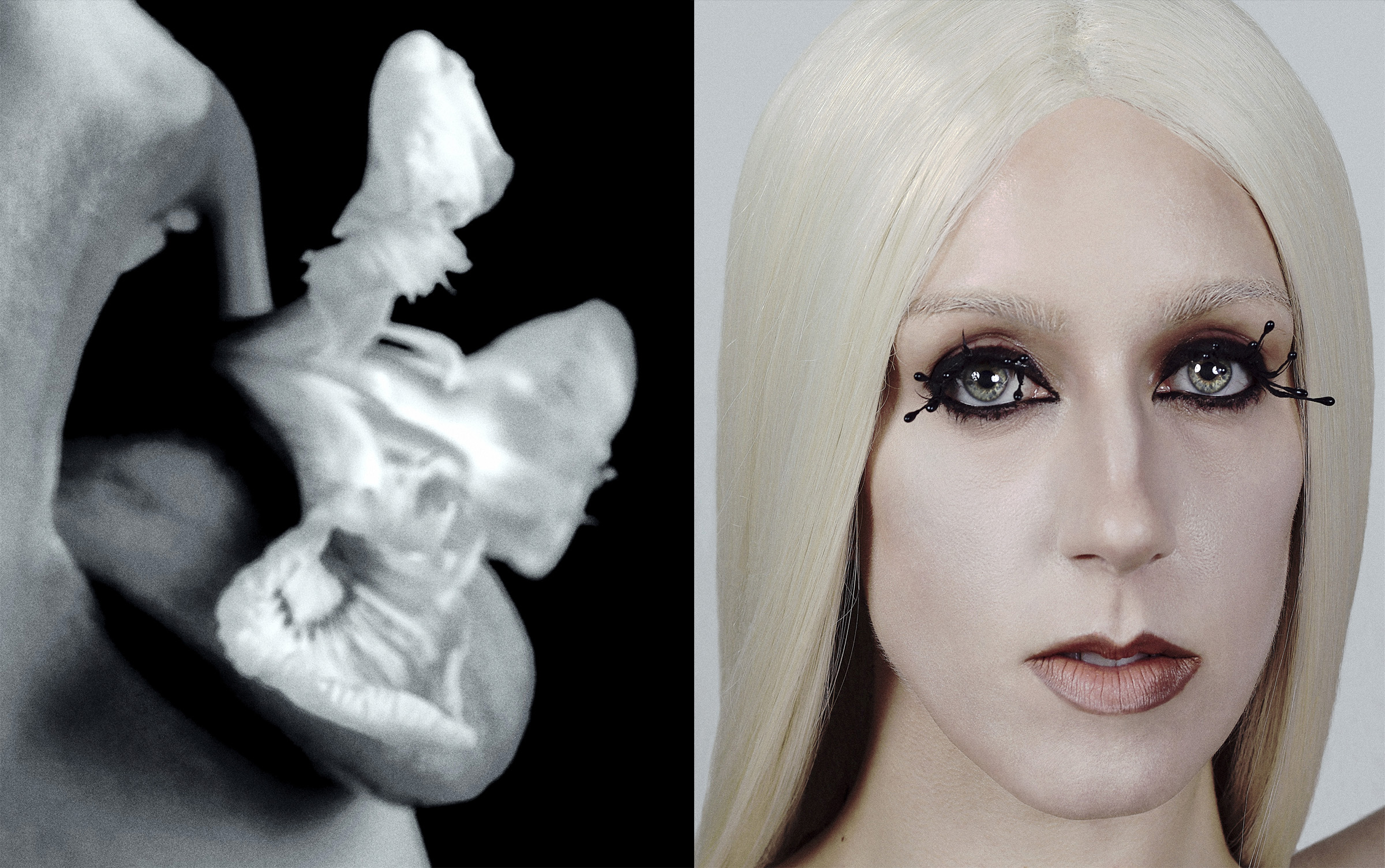
Over the past few years, Rare DM has evolved from a musical project into what feels like a complete artistic world. Songwriting, production, performance, moving image, and fashion all seem to operate within the same visual and emotional language. Did that multidisciplinary vision emerge naturally, or was there a point where you realized the project had become something larger than music alone?
The multidisciplinary realm emerged naturally, although I think it is in my blood. My parents are both fine artists, my dad is a drummer, my grandmother was a runway model and had impeccable taste in all things. I was always drawing / creating when I was growing up, always loved dancing – (I went to the local college from 14 on, going to partner dancing classes – swing, tango, blues, etc) and I attended fashion design school before I dropped out to pursue music. Rare DM became more all encompassing the more skills I learned / the better at DIY I became. I am better at producing than I was 5 years ago, or a year ago. I think my taste has been very consistent and evolved naturally, but executing my visions has gotten easier as my skills have developed; for example it’s much easier to have a video be how I want it to be, now since I can edit them myself.
The word Attention can signify recognition, intimacy, performance, surveillance, desire, even care. Was the album born from one of those meanings in particular, or did you want the title to hold all of those tensions simultaneously?
I definitely wanted the title to hold all of those tensions. The title is very appropriate in a number of ways, which I like. There is a thread between seeking attention vs. getting attention you don’t want, not paying enough attention, or battling having your focus pulled somewhere against your will.
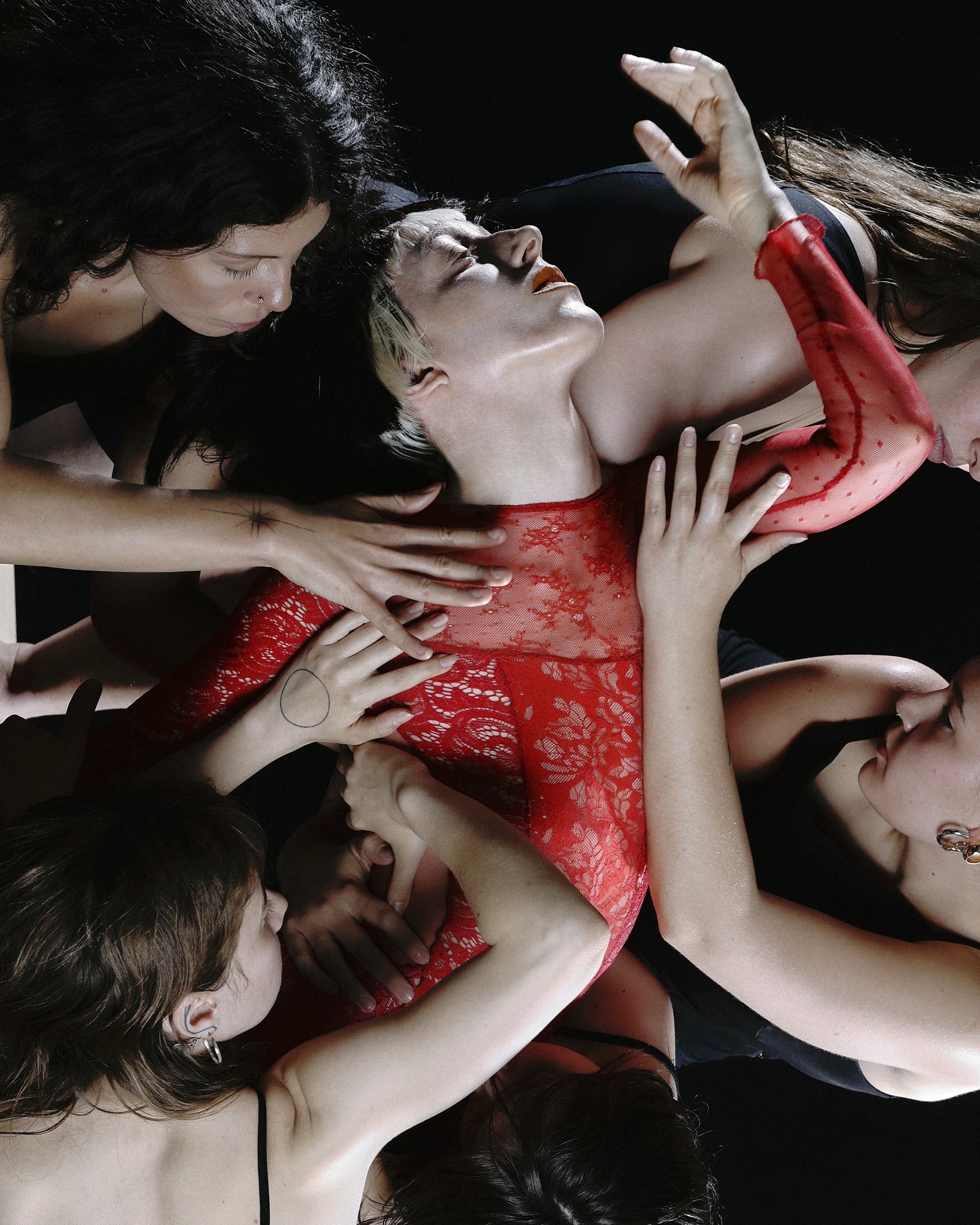
Listening to the record, I was struck by how often attention seems to function almost like an emotional currency, something people pursue, negotiate, withhold, and perform for one another. Did writing the album change the way you think about attention itself?
It’s important to note that I wrote the songs before deciding the album name. I believe in the power of words, and manifestation. Writing these songs and determining the throughline was a journey in itself, that did make me reflect on attention – what I want, what I don’t want. I think you have control of your life, I don’t think it’s good to think life happens TO you. I think you should actively go after what you want and sometimes lessons appear along the way to test your will power. I love attention! (Most of the time!) I think attention without intention can be dangerous.
We’re living in a culture where visibility is almost constant, yet genuine recognition can feel increasingly rare. Do you think we’ve begun confusing being seen with being understood?
I actually think a lot of people don’t care about being understood, as long as they are seen. Think of ragebait accounts. They don’t care about being understood, they just want the views. I think wanting to be understood while being seen is a sign of integrity. It’s very important to me to create honest songs that come from my heart. I do want to be seen because I would like to continue to perform because that stage / visibility is how you can have a career in art. Very few people have the luxury to make art without also thinking about how to get eyes on the project. Unless you are among the extremely privileged who can afford to pay someone to market their art, or have a connection to get a foot in the door from the get go, you will probably have to worry about being seen. Being understood should happen in tandem with being seen, if the work is honest.
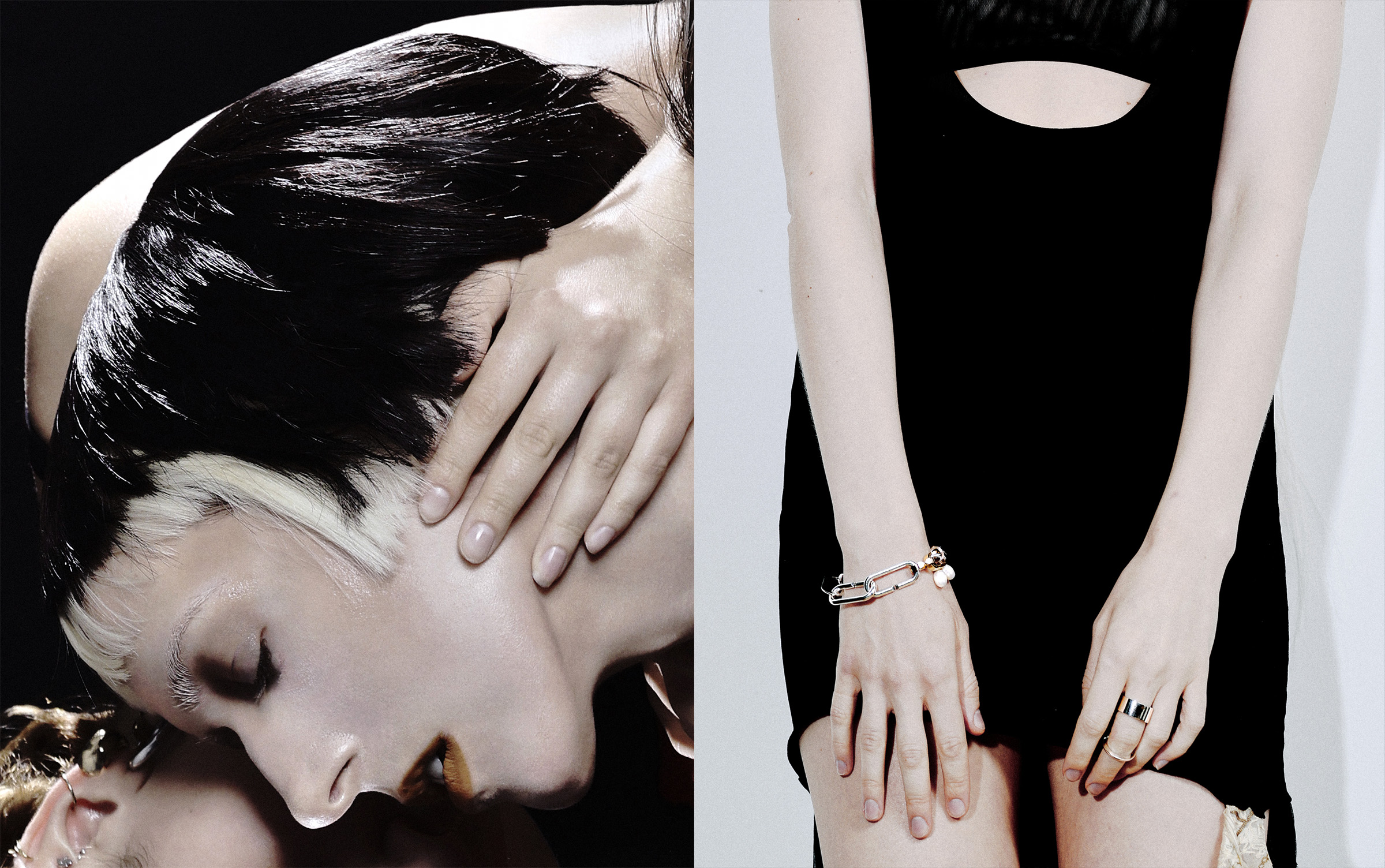
Much of Attention seems to unfold in spaces of nightlife, clubs, parties, dance floors, but those spaces never feel purely celebratory. They almost become stages where people perform desire, confidence, vulnerability, and status. What fascinates you about those environments as a songwriter?
All of those spaces have a proclivity towards darkness, I find them aesthetically intoxicating. They can be playful, sultry, romantic, or dissociative, isolating and lonely. I am very inspired by the night in general. It’s where I get most of my best ideals and I find it beautiful. I think they don’t sound celebratory because I am usually drawn to darker and gloomier sounds, and most of my writing comes from distress, worry, or dilemma, not celebration.
The album also made me think about ritual. Nightlife has its own repeated gestures: dressing up, dancing, flirting, disappearing, returning. Were you consciously interested in those rituals while making the record, or is that something that only revealed itself afterward?
Oh I have always loved all of those things, and that’s part of my job now. I have so many rituals preparing for and performing live sets, and for writing music. I love making everything a ritual in my day to day life as well – showers, meals, bedtime. The longer I am alive the more rituals I collect and observe. I have always dressed up, disappeared, returned. I am an ambivert. People think I am very extroverted, and they are correct in that I am not shy, but I love my time alone, I love being independent, and I choose when I want to be around. So I don’t think it’s a conscious decision, it’s more of a consistent pull toward all of those things.
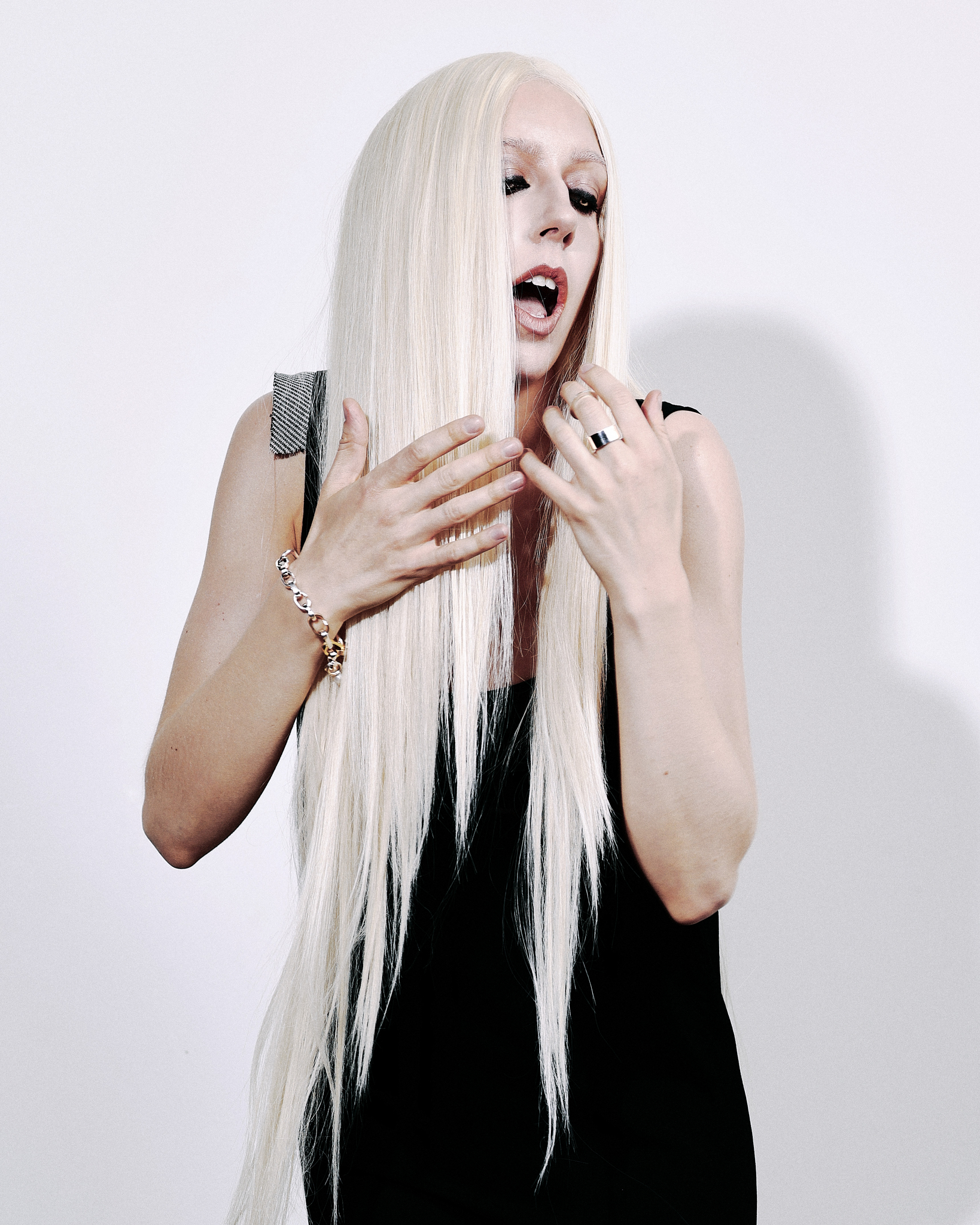
One of the things I admire most about the “Compliment” video is that it feels genuinely surrealist rather than merely surreal. It doesn’t ask the viewer to decode a narrative so much as inhabit a psychological space.
You’ve spoken before about Maya Deren’s influence, and I immediately thought of Meshes of the Afternoon, where emotion unfolds through dream logic rather than linear storytelling. What does surrealism allow you to communicate that realism can’t?
The Maya Deren flowers need to go to my incredible director and friend Lisa Saeboe, who is my surrealist sensei. She understood the repetitive dream like nature of my song, and is one of the few people I trust with my visual world, that I can fully put Rare DM into her hands. She is the architect of the “Compliment” realm and it was awesome to see how my song was interpreted through someone else’s lens, designed with me in mind. She communicated the song better than I could have, and being able to edit it myself made it an incredible collaboration. I think surrealism can often communicate a feeling better than realism can, which I think we accomplished with the video.
Across your visual work, the body rarely functions as a straightforward portrait of identity. It becomes symbolic, choreographed, fragmented, even sculptural. What role does the body play in your artistic language?
I would be nowhere without my love for dance and fine art. I have an ever-evolving style of movement that feels natural to me and is informed by those loves. I am drawn to certain shapes and forms more often than others. I suppose it has influenced my hair as well. When I have a performance, shoot, or video, I think about shapes, how my body is placed, the proportions I want to exaggerate and perfect.
There’s a fascinating tension in your music. Sonically, it is often cold, restrained, and minimal, while emotionally it feels deeply vulnerable. Is that contrast something you consciously cultivate, or does it emerge naturally from your writing process?
That contrast is intentional now, but I think it emerged naturally, you could even say it was “by accident” originally in my earlier work. Now the contrast is something I actively explore.
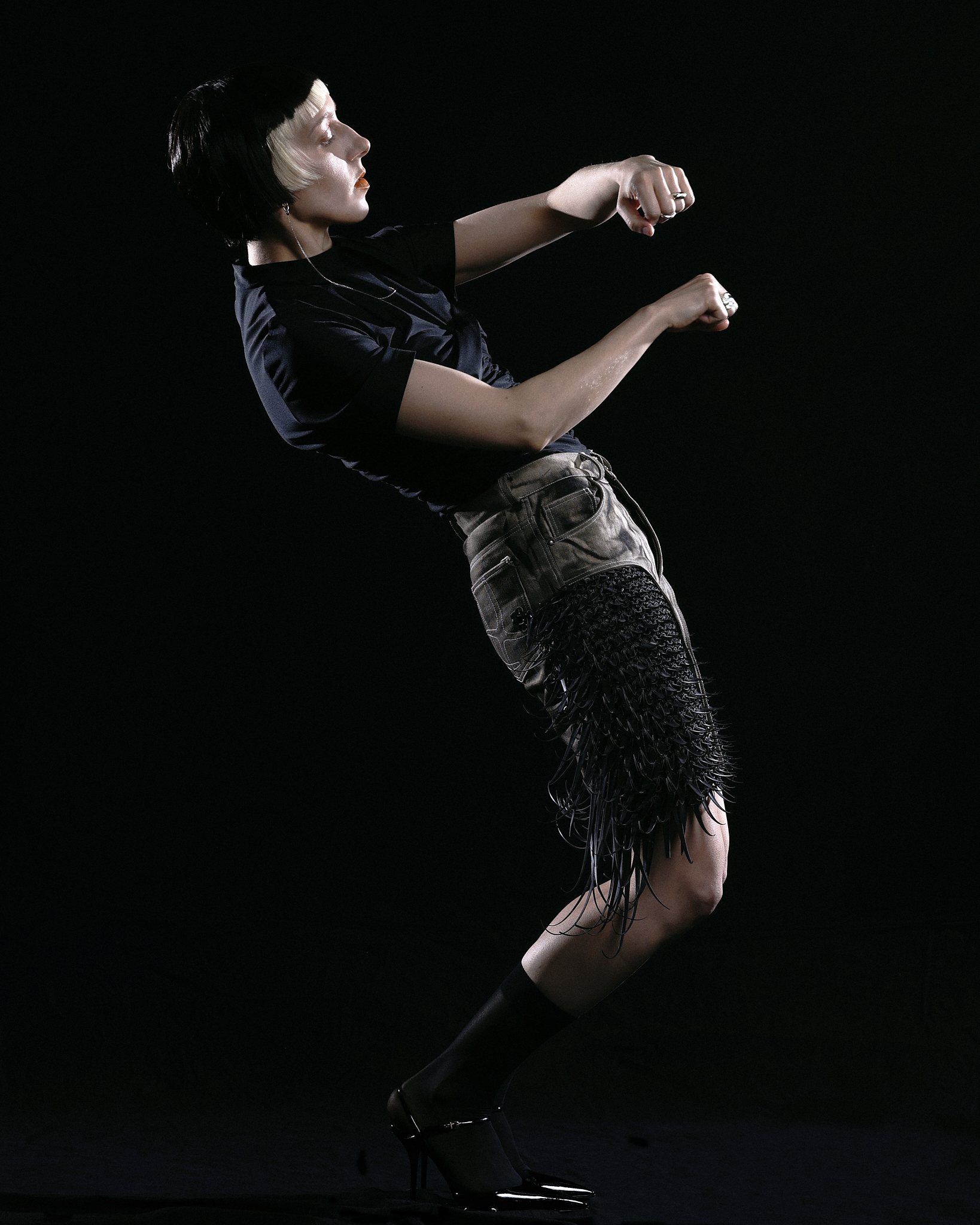
One motif I kept returning to throughout Attention was movement. Cars, traffic, engines, touring, cities, dance floors. The record rarely feels stationary, either physically or emotionally. What draws you to movement as both an image and a state of mind?
I’ve written so much music while in motion. I write on my bike, in cars, on trains, while dancing. My best lyrics are created in transit; my videos and performances are more interesting while in motion. Static is boring IMO unless it’s used to contrast an action. Stillness is something I use very intentionally to accentuate movement. This goes back to writing your own destiny, creating your own world. My record is not stationary, and I suppose I am “driving” that home – they are lyrically inspiring to me as well, clearly!
Your work is often associated with darkwave and coldwave, but it also draws from synth-pop, club music, and experimental cinema. Do genre labels still feel useful to you, or have they become increasingly limiting?
They are sometimes useful when you are talking to someone new, and they want you to help them discover your music. Maybe they are trying to politely find out if it’s “for them” …and then it’s like a little game that you run through talking points til they can put you in a box. With this, it is useful but also a little tedious. If they don’t understand what you are trying to express, perhaps they have made up their mind that they wouldn’t like your music, because they don’t like “the box” you are in. That’s why I try to avoid strict boxes.
Maybe they don’t like “darkwave” because their understanding of “darkwave” is a band that sounds nothing like you, and then they never listen to your music to decide for themselves. I have invited people to shows before and said “electronic” and they said “I don’t like EDM” in response. I don’t make EDM obviously, so I always have to tailor descriptions / labels to the person I am talking to, in order to more accurately describe my music. Often they don’t know what EBM, synth pop, techno, coldwave is, and you are trying to find something to make your music make sense to them. It’s exhausting.
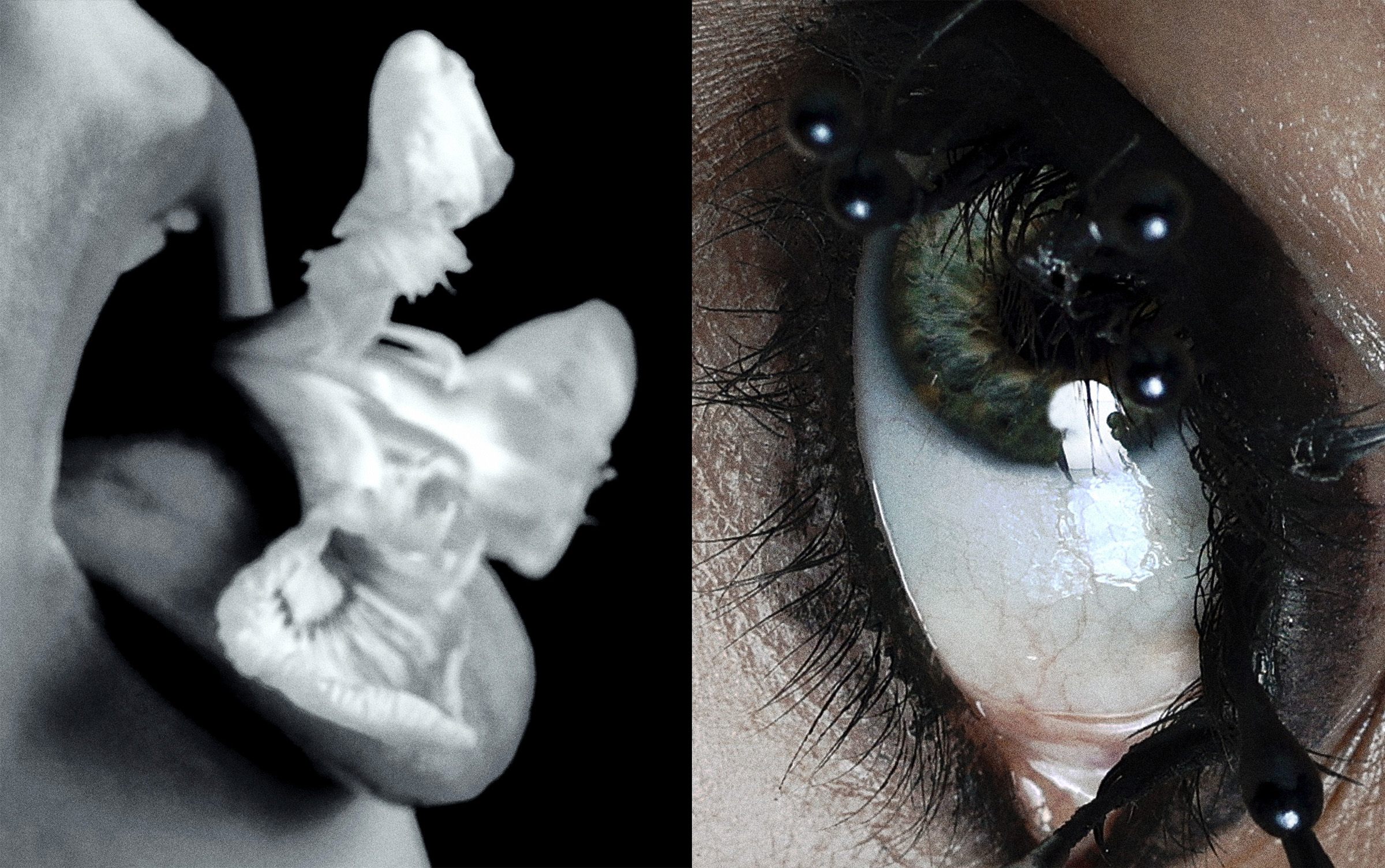
Looking back, Vanta Black felt intensely interior, a record concerned with heartbreak and personal loss. By contrast, Attention seems much more interested in social life, attraction, performance, visibility, and power. Do you see those albums as documenting different emotional chapters of your life, or different ways of observing the world?
Both! I was in my darkest hour back then, totally heartbroken, a different person entirely. The visual cover of Attention vs. Vanta Black was intentional, Vanta Black felt like the world was closing in around me, and with Attention I am comfortable being in focus, ready to take on the world. My song writing expresses that too.
You’ve increasingly taken ownership of nearly every aspect of your practice, from songwriting and production to directing and editing your own videos. Does that level of creative control feel liberating, or does it also make it more difficult to know when a work is truly finished?
It is absolutely liberating, but also incredibly daunting. I do have trouble finishing songs in a reasonable amount of time, and to knowing when to leave an edit alone. I do get hung up on the details and love having someone to crack the whip to help me cross the finish line. I find it really easy to know what I want visually, sonically it is more challenging to be quick and decisive, it’s a different type of vulnerability. I am trying to be less of an island. I have my most consistent visual collaborators, Lissyelle Laricchia, Lisa Saeboe, Jake Moore, and Calvin Stark, all of whom I am forever grateful for. Since this record, I have a trusted musical collaborator, Ross Fish, an incredible producer and mixing/mastering engineer.
Now that Attention has been in the world for a little while, has your relationship with the record changed? Have listeners revealed something about the work that you hadn’t anticipated?
There are songs that are getting more love than I anticipated. I thought LA Traffic for example might be a favorite off of the record, but Butterfly Historian is getting more listens than I expected, which is surprising. That being said it’s still a fairly under the radar record, with time I am sure more songs will surprise me. I think it reveals which songs people relate to. Butterfly Historian is a more relatable song than LA Traffic perhaps, but I don’t know!
Without asking you to reveal too much, I’m curious whether you feel you’re moving toward a new artistic language. If Vanta Black explored interiority, and Attention examines visibility and social performance, where do you imagine the next chapter leading?
I consider myself a “works process” artist, and the art evolves and informs decisions as I go. I have learned things about myself and the world through each record, and the next one will have a new me making the record, which isn’t the person who wrote Vanta Black, or the person that wrote Attention. I am now the person who wrote both of those records, which is new. Maybe I will probably marry the two records, and incorporate a new secret third thing.
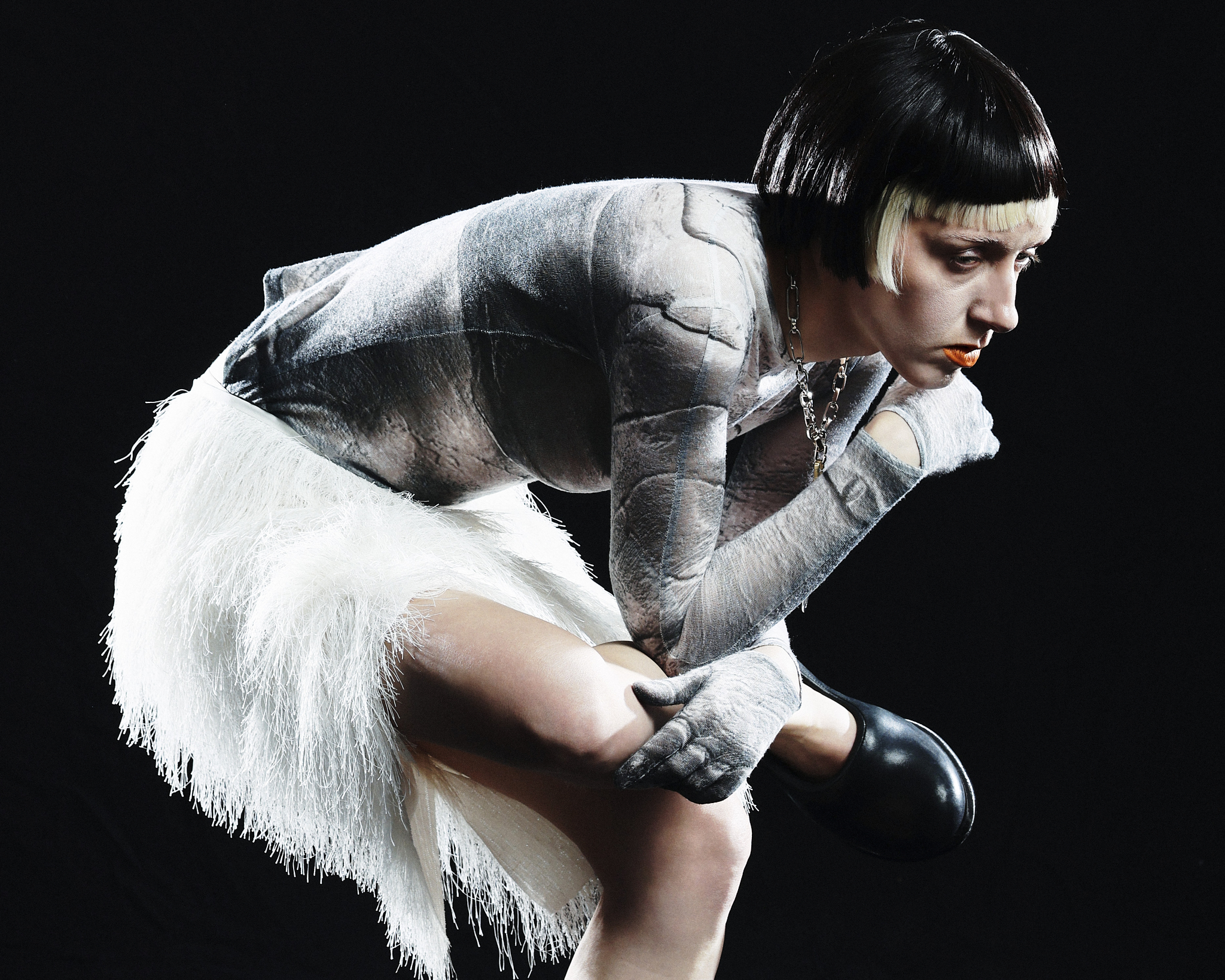
Featuring: Rare DM
Photography & Art Direction: Maud Rallière
Styling: Carla Cerda
Styling Assistant: Roksolana Onufrak
Hair: Katrin Sachenko
Makeup: Flavie Delobbel
Featuring: Leelou Lancel Clara Soto Louise Melli Morgan Poulain Lola Rodriguez
Lighting Assistant: Lara Sanchez
Studio: Studio Zorse
Cody Rooney is the Editor in Chief and senior contributor at liminul.He is a PhD candidate, digital content specialist, writer, editor, multi-media artist, and photographer.