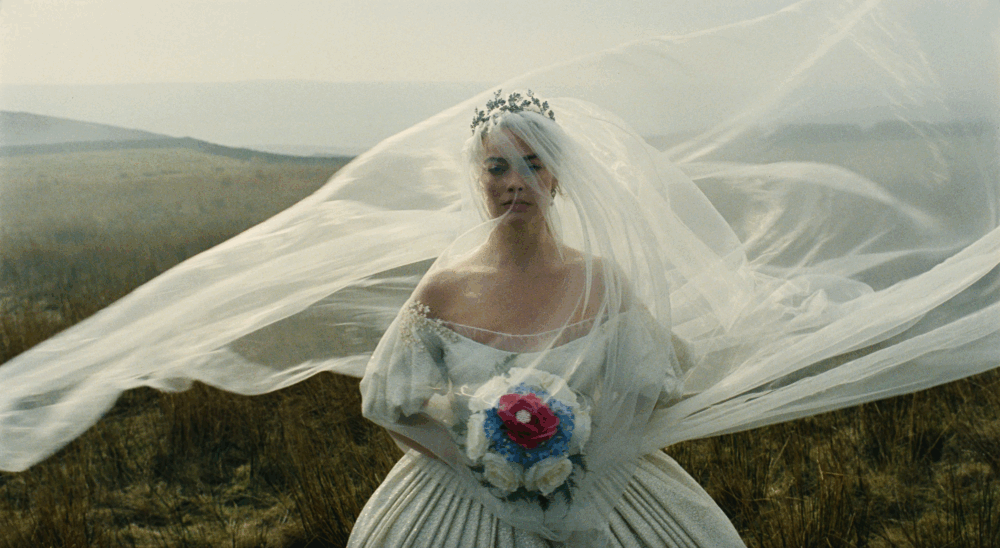
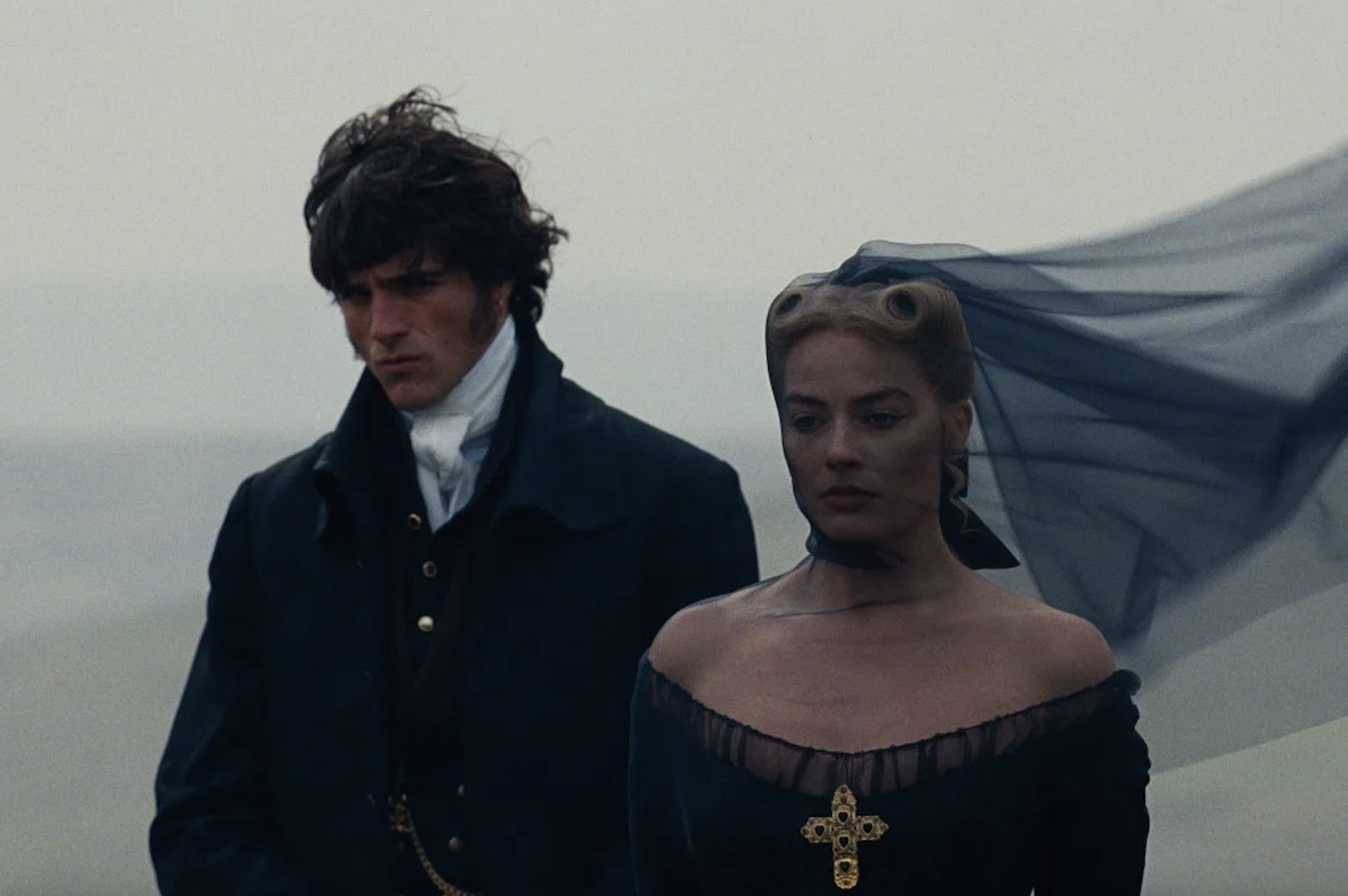
In the past few years there has an indelible rise in gothic aesthetics. From Yorgos Lanthimos’ whimsical Poor Things, to Robert Eggers’ exploration of female desire in Nosferatu and his upcoming folk-horror take on medieval werewolf mythos The Werewulf, to the controversial Emerald Fennell adaptation of “Wuthering Heights” released earlier this year. Gothic novel adaptations are becoming a visible force in film. The trend has spread to music too. Mitski’s new album “Nothing’s About to Happen to Me” cover features a cat with heterochromia staring lazily at us, unaware it is about to be attacked by another feline, leaping in from out of frame. Behind the surrealist artwork one infers a reference to the gothic novel “The Yellow Wallpaper” from 1892. The novel depicts a story of a woman descending into madness, locked in a room with yellow wallpaper, succumbing to hysteria (what would later be termed postpartum depression). And online the “Wuthering Heights” visuals have already emerged into yet another TikTok micro-trend “moorcore”. Culturally we seem to be drawn to a new sort of escapism, reviving literary references and aesthetics from days of yore. Which raises the question: why do we keep avoiding the present with an aestheticized and highly stylized version of the Victorian past?
Wuthering Heights is a perfect case study of aesthetic over substance. The film takes a complex classic English novel and strips it of its confronting themes – most notably ignoring racial otherness in Heathcliff, and the class brutality that fuels both Catherine and Heathcliff characters actions – what is left behind is an amalgam of aesthetics which feel befitting to Pinterest boards and desire packaged as horniness. This tonal disconnect was tangible even in cinema; the audience laughed at moments of suffering or tension between two protagonists, not because the film was entertaining, but because it has departed from its emotional stakes. The result is a beautiful, atmospheric but ultimately hollow set of pictures. It is no coincidence that film has started a “moorcore” aesthetic online trend. The “moorcore” is inspired by the moody atmosphere of British moorlands, gothic romance and a “suffocating luxury” – it blends Victorian-inspired elements like lace, corsets, velvets in fashion, and draws from imaginary of foggy landscapes, medieval ruins and dramatic nature scenes, it is arguably a gloomier successor to “cottagecore.” The Wuthering Heights’ extensive press junket and box office earnings emphasise that this cultural trend shows something bigger at work, we are not just aestheticizing the English moors – the appeal lies in nostalgia and escaping from the present to the past that never existed.
The broader cultural appeal in current media points to our inability to imagine the future, as we keep escaping from the current political and economical tensions of the present. This is where Mark Fischer’s “diagnosis” becomes useful. In his book Capitalist Realism he observes that “it’s easier to imagine the end of the world than the end of capitalism” and the failure is structural. Capitalism neutralizes resistance by absorbing it, transforming critique into lifestyle and opposition into commodified aesthetic by fostering what he calls “reflexive impotence”, the condition in which we know that something is wrong but just keep consuming content and changing nothing. Moorcore is in essence of “reflexive impotence” its gothic and Victorian visuals repackaged as a TikTok aesthetic, commodified melancholy, the sensation of depth without the demand of it. This is also what makes nostalgia politically dangerous. Fascist and conservative politicians have understood early on that an idealised past is better than an unstable future imbued with potentia economic, political and environmental collapses. Therefore the use of nostalgia to spread the narrative of a return to the past that never existed is employed, largely, instead of trying to imagine a better future. Nostalgia is a sedative because it makes regression feel like longing.
Fischer believed that the first step to resistance to capitalism is to imagine a better future without capitalism. It means that instead of just critiquing capitalism – one should create art, generate ideas, and write stories oriented towards the future rather than the curated past. Imagine having a community, imagine being politically active and change something in your local city, imagine we have global universal basic income, imagine a world in which there are no billionaires, imagine free public transportation for everyone, imagine the world where we all can make art without being a nepo baby. Not another “core” on the Pinterest moodboard, but cultural forms that refuse the past and insist on perhaps uncomfortable work of imagining what comes next. The moors are beautiful but we do not live there, and we never did.
 Daria Bezuhla is a Berlin-based video-essayist and writer. A cinephile at heart, she explores film, media and fashion trends through her video-essays and writing focusing on how culture, politics, and technology shape our perception. Follow her on YouTube.