
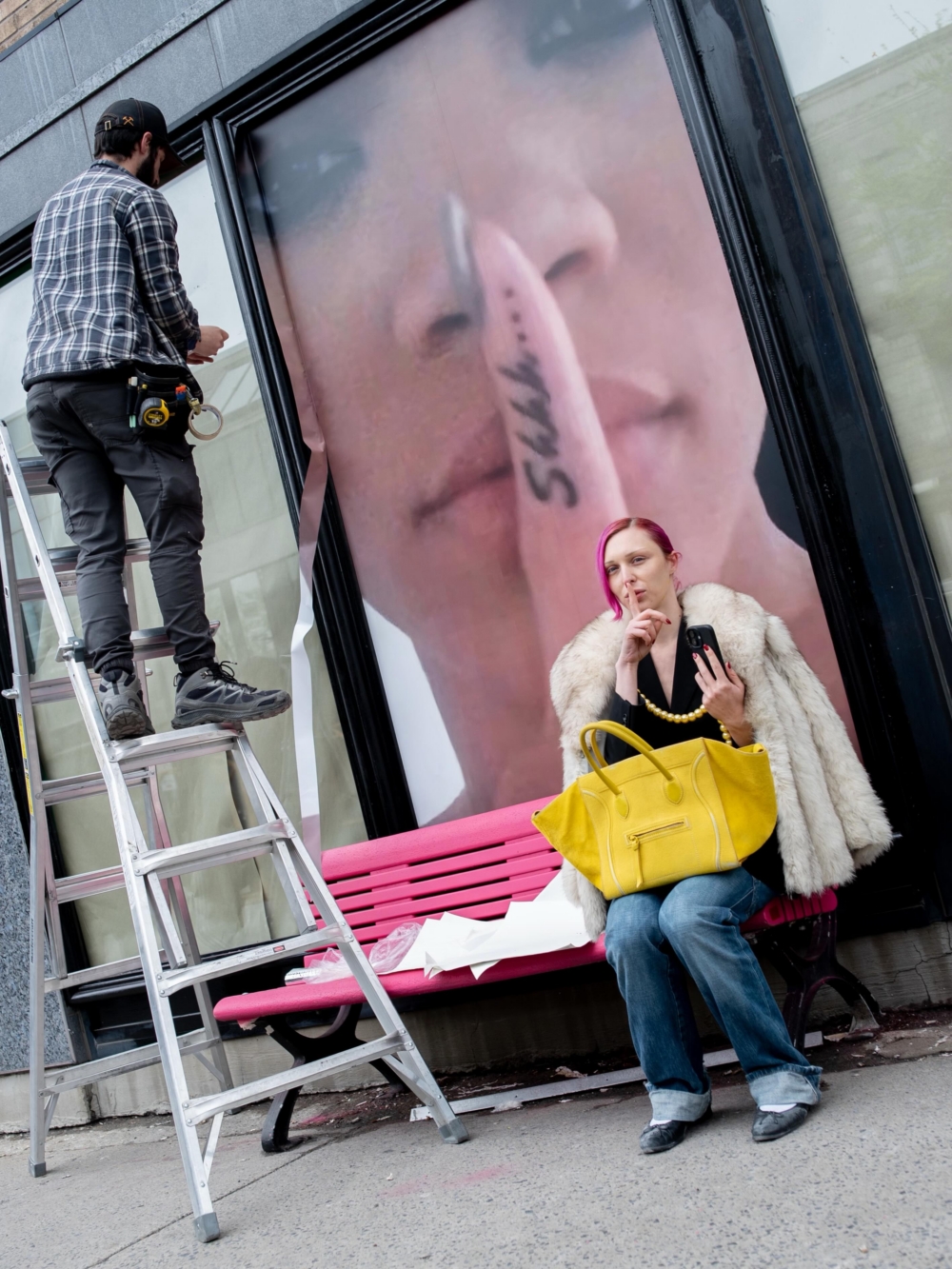
What does the person who designed the Tim Hortons logo have in common with Addison Rae, Nathan Fielder, and a scientist studying the origins of the universe? For Montreal-based creative studio Wine, Women & Song, they’re all potential collaborators. The connections might not be immediately obvious, but that’s rather the point. Founded by Camille Béland, who goes by Calmylin, Wine, Women & Song operates somewhere between a creative direction studio, production house, and ongoing experiment in cultural world-building. Its interests range from underground music and fashion to obscure Facebook groups, kitsch, and the peculiar visual language of the internet. Its ambitions are considerably harder to categorize.
“I would say it’s a creative studio because it encompasses everything,” Calmylin explains. The work spans graphic design, music videos, brand identities, and experiential activations. But defining the company by its services risks overlooking what actually makes it interesting: a willingness to pursue an idea simply because it seems worth making happen. “If I have an idea and I don’t do it, it’s like poisoning me,” she says. “I have to figure a way to do it.” A high-heel race? Perhaps. A tie-dye workshop in London? Why not? An interview with the person responsible for one of Canada’s most recognizable corporate logos? Absolutely. The challenge, as Calmylin is discovering, is figuring out how to build a sustainable business around a practice that resists conventional definition.

Calmylin’s career began in Montreal’s underground music scene during the pandemic. Having dropped out of communications and marketing studies in 2021, she started designing flyers for DJ friends organizing parties in the city’s basements. She learned largely through experimentation, teaching herself the skills necessary to realize whatever project she had in mind. “I never thought of myself as an artist or a creative,” she recalls. “I was more of an entrepreneur.” That entrepreneurial instinct eventually led to graphic design work with Saintwoods and Montreality, the latter opening doors to music festivals including Camp Flog Gnaw and Rolling Loud. She describes herself as the “CEO of side quests,” an affectionate acknowledgment of her tendency to pursue an ever-expanding collection of creative interests. Wine, Women & Song emerged from a growing frustration with the restrictions of the music industry, particularly environments where she found herself struggling to push unconventional ideas forward. “I was always trying to push my ideas, but it was hard to move forward,” she explains. Launching her own studio offered a way to work without continually negotiating away the strangeness of her concepts.
The studio has since developed a visual identity that is as difficult to pin down as its services. Its imagery draws from the vernacular aesthetics of the internet: lo-fi graphics, exaggerated femininity, nostalgic ephemera, and references that move between the sincerely affectionate and the deliberately ridiculous. There is an obvious fluency in meme culture, but the work is not entirely reducible to irony. Behind the humour is a genuine fascination with how images accumulate meaning through circulation, repetition, and everyday use. Joining Calmylin is creative producer Firuza Huseynova, whose background in business, philosophy, and digital humanities brings another perspective to the studio’s practice. Currently pursuing a master’s degree at McGill, she was drawn to the way Wine, Women & Song negotiates digital culture and physical experience. “It’s so native to the internet, also very tethered in real-life experiences,” she says, pointing to the studio’s interest in vernacular culture, kitsch, and experiential design. Together, they’re exploring what happens when these references become the basis not only for an aesthetic, but for an entire creative business.
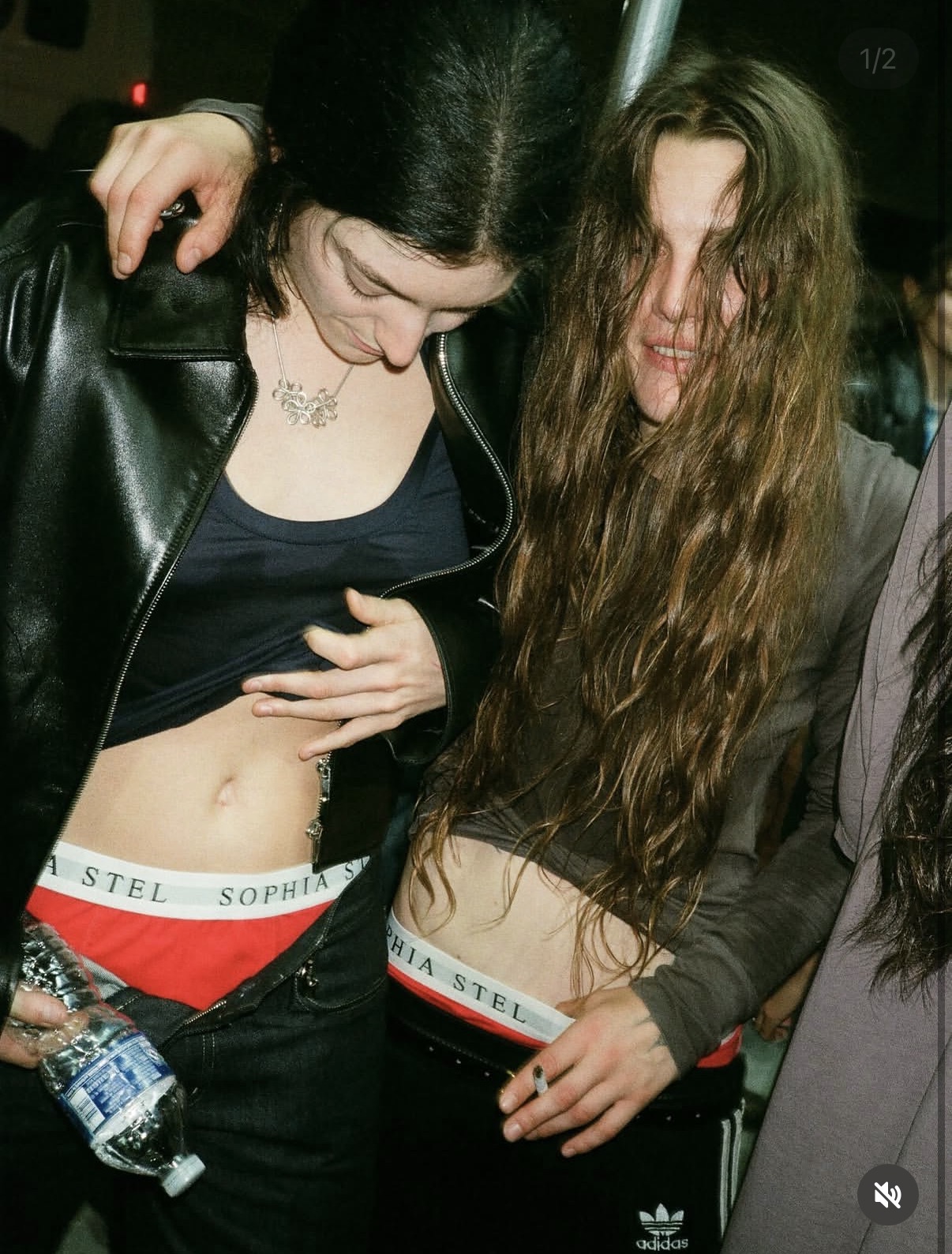
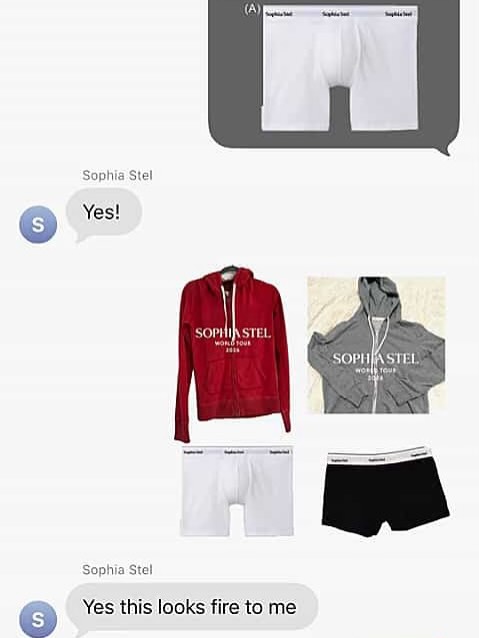
One of the studio’s defining instincts is identifying artists and cultural movements before they reach a wider audience. Calmylin points to an early music video collaboration with French artist Theodora, undertaken before the musician’s major breakthrough. Another example is Vancouver musician Sophia Stel, whom Calmylin initially contacted through Instagram after discovering her music. “I fuck with your music so much. Let me do your merch,” she recalls. Their first project together was a vinyl design tied to a modest grant. But as the artist’s career developed, so did the relationship. Following Stel’s signing with A24 Music, the studio secured a larger contract to develop graphic material around her release. It’s a trajectory that reflects Wine, Women & Song’s approach to building relationships: finding artists whose work they believe in, investing in the relationship early, and growing alongside them. “We talk a lot about seeing into the future a little bit and trying to predict what’s happening,” Firuza explains, describing an intuitive approach to recognizing emerging talent. The objective is to attach themselves to something they genuinely believe in, with the conviction that others will eventually come to recognize its potential.
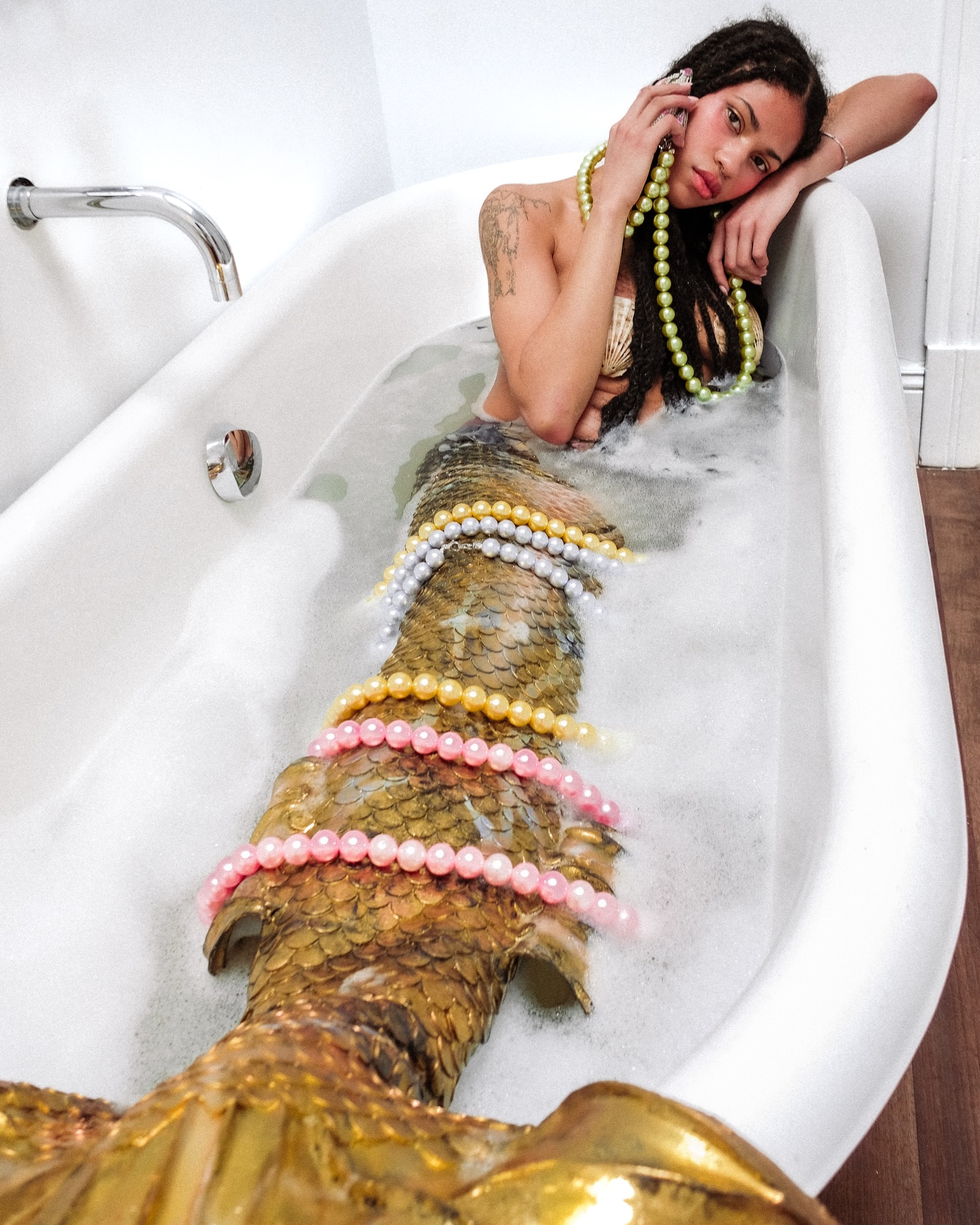
The studio’s work with Montreal vintage boutique Le Palais and independent label Nina Bow offers another example of how its sensibility translates into physical space. For the storefront, Calmylin describes installing a comically oversized image of Rihanna, an intervention made possible because the client was willing to trust her creative judgment. That trust, however, is not always easy to establish. “When you start, it’s hard to convince the client to trust the vision,” she explains. The studio’s more experimental projects often come from emerging or independent clients with limited resources. Larger companies may have the money to support ambitious ideas, but they can also introduce approval processes and commercial expectations that dilute their originality. “We attract the bigger clients that have money, and they want the same feel. They want cool, they want something different,” Calmylin explains. The difficulty comes when delivering that difference requires compromising the very instincts that attracted those clients. For Firuza, part of the responsibility is introducing collaborators to unfamiliar creative territories. “With clients who maybe are not so literate in the kind of references that we’re bringing, part of the project is also pushing their boundaries a little bit,” she says.
It’s a familiar contradiction in the creative industries. Brands want the cultural credibility of independent creative communities, but are not always comfortable surrendering the control that allows those communities to produce interesting work in the first place. For Wine, Women & Song, the ambition is to reach a point where clients approach the studio precisely because of its vision, rather than treating that vision as something to be moderated. Until then, Calmylin is realistic about the compromises involved in running a service-based business. “We’re trying the most we can to push boundaries, but if we decide to give the service, the client becomes the boss a little bit,” she acknowledges. Some projects never make it into the studio’s public portfolio, either because they failed to meet its creative standards or no longer represented the world it wants to build. “If there’s a project we do that is not us, I don’t think we will put it out,” Calmylin says. The studio’s public identity, in other words, is as much a product of what it chooses to withhold as what it chooses to create.
For a studio so deeply informed by internet culture, Wine, Women & Song is increasingly interested in what exists outside its dominant platforms. Calmylin describes a growing attraction to long-form content and more considered visual work, without abandoning the humour and irreverence that have shaped her practice. “I’ve been really into shitty, memeable, ironic stuff,” she admits. “I wanna push into a more high-quality [approach], with still the same angle of irony and fun, authenticity.” She is also drawn to the internet’s less visible communities: obscure Facebook groups, regional subcultures, and digital archives that feel untouched by contemporary branding conventions. Firuza points to Are.na, the collaborative research platform, as a particularly useful alternative to algorithmically driven image discovery. Its collections, assembled by users around highly specific interests, offer something different from the relentless visual repetition of Instagram and Pinterest. “You can find collections of images that people have curated over time that are so near and dear to them,” she explains. “The internet now is such a corporatized place.” That growing frustration with the platforms that once promised boundless creative discovery is central to the studio’s evolving interests. As Firuza puts it, “It’s hard to find places online that feel really good.”
That frustration has also encouraged a renewed interest in physical spaces. Calmylin recalls discovering a small family-run shop in Montreal selling old Italian music CDs. Tucked away in a dusty basement, the store offered more than an unlikely source of visual references. Its owners, the music, and the history surrounding the objects provided a kind of cultural context that an image found online could not reproduce. “You can see all the imagery of Italian CDs on Instagram,” she explains. “But going to the stores and talking with these people and understanding their stories, it gives you ideas.” There is an important distinction here. Wine, Women & Song isn’t necessarily rejecting internet culture; it is questioning whether digital platforms still offer the conditions for meaningful cultural discovery. The studio’s interest in workshops, parties, and installations follows a similar logic. Proposed projects include collaborative clothing workshops, a tie-dye event in London, and eventually a festival bringing together the artists and communities that have become part of its network. “Community is one of our big pillars,” Calmylin says, emphasizing the studio’s desire to create opportunities for people to participate rather than merely observe.
Firuza cites Studio 54 as an inspiration, not simply for its reputation as a nightlife institution, but for the way its events became cultural experiences in their own right. She first encountered Wine, Women & Song at an absurdist video screening, where a contribution from Calmylin prompted her to investigate the project further. It was an encounter that demonstrated how an independent creative practice could attract attention without relying exclusively on the mechanisms of digital visibility. For Wine, Women & Song, bringing people together is not just another service to offer clients. It is an opportunity to create the kind of spaces and experiences that generate culture rather than merely respond to it.
Montreal has played an important role in allowing that experimentation to take shape. Calmylin describes the city as both home and playground. Its relatively accessible creative community and lower costs compared with larger international centres have allowed her to test ideas without the same degree of financial risk. “Montreal is a really nice playground to test all of your ideas,” she says. “The community is small, it’s accessible, and you can just try.” But the scale of the city presents limitations, too. Navigating its relationship with both French- and English-speaking audiences has raised questions about the studio’s identity and the communities it hopes to reach. “Should we start more English videos? Should we speak more to Quebec people?” Calmylin asks, articulating a tension familiar to creative practices attempting to grow beyond the particular cultural conditions from which they emerged.

International expansion is already part of the conversation. London, Barcelona, New York, and Los Angeles are all on Calmylin’s radar, although her ambitions extend well beyond opening offices in different cities. She imagines Wine, Women & Song eventually operating its own creative residencies, physical spaces, and independent productions. There is even talk of a television show. There is even talk of a television show, with an A24 production among their ambitions. More than anything, she wants the studio to become a recognizable cultural universe, something capable of moving between media, industries, and locations without losing its identity. “My favourite client would be Wine, Women & Song,” Calmylin says. It’s a revealing answer. The ultimate ambition is not necessarily to become an agency serving bigger and bigger brands. It is to build something with enough independence that its own projects can become the principal attraction. “Wine, Women & Song is more, it’s a lifestyle,” she explains, imagining a cultural identity with the immediate recognizability of “sex, drugs, and rock and roll.”
For all the studio’s playful disorder, Calmylin is remarkably serious about the infrastructure required to sustain it. She speaks enthusiastically about client acquisition, sales, financial systems, and building a company that can function without her remaining its constant public face. These are the less glamorous foundations of the business, but she understands their necessity. Indeed, even the act of selling an idea appears to hold its own creative appeal. “My personal favourite part is pitching to clients and actually convincing them that it’s a good idea,” she says. “It’s like sales. It’s also theatrical.” The problem is that conventional entrepreneurial wisdom often seems fundamentally at odds with her creative instincts. Much of the business literature she’s encountered emphasizes the importance of defining a clear offer, establishing a recognizable service, and maintaining a focused market position. Each time Calmylin feels she has arrived at an appropriate definition for Wine, Women & Song, another idea threatens to disrupt it. “I figure it out: it’s a creative studio in the music industry,” she explains. “And then I’m thinking, fuck, I want to organize a high-heel race.”
There is something refreshing about a founder willing to acknowledge that the central question of her business remains unresolved. Can a studio achieve commercial success without narrowing the range of things it wants to create? Can experimentation itself become a viable business model? And is there a way to grow without turning an initially subversive aesthetic into another easily recognizable commercial formula? Calmylin recognizes that even the internal structure of the company has become another site of experimentation, one in which the logic of entrepreneurship must somehow accommodate the unpredictability of artistic practice. “It’s a learning in progress to also challenge the boundaries of the visual world, of the business world,” she says. The tension is not simply between artistic freedom and client expectations, but between the necessity of defining a business and the desire to remain creatively undefined.
These questions are particularly relevant at a moment when brands increasingly seek cultural differentiation through niche aesthetics, independent communities, and experiential projects. As digital content becomes easier to generate and reproduce, the ability to offer a genuinely distinct perspective—or create an experience that cannot simply be replicated on a screen—takes on a different kind of value. Wine, Women & Song is attempting to build a business around precisely those possibilities. Whether its model proves commercially sustainable at a larger scale remains to be seen, and Calmylin makes no attempt to pretend otherwise. “I think the thing we will all discover together is, can we make a living by playing and trusting in our ideas?” she wonders, framing the business itself as an ongoing experiment.
Part of the motivation is personal. Calmylin didn’t come from a wealthy family, and she wants the people following the studio’s development to see what it looks like to build something independently, one project at a time. “We’re building from the ground,” she says. “I don’t come from a rich family, and it’s just like building brick by brick.” There is an aspirational quality to this openness, but also a willingness to make the uncertainty visible. Rather than presenting commercial success as a foregone conclusion, the studio is inviting its audience to witness the process of finding out whether its ambitions can be realized. “Is anything really possible? Let’s try.”
For now, Wine, Women & Song is still working out exactly what it wants to become. But perhaps the more interesting possibility is that it never settles on a single answer. In a creative industry increasingly preoccupied with finding the right formula, that refusal might be its most valuable asset.
Explore Wine, Women & Song and follow @wine_women_song.

Cody Rooney is the Editor in Chief and senior contributor at liminul.
He is a PhD candidate, digital content specialist, writer, editor, multi-media artist, and photographer.