
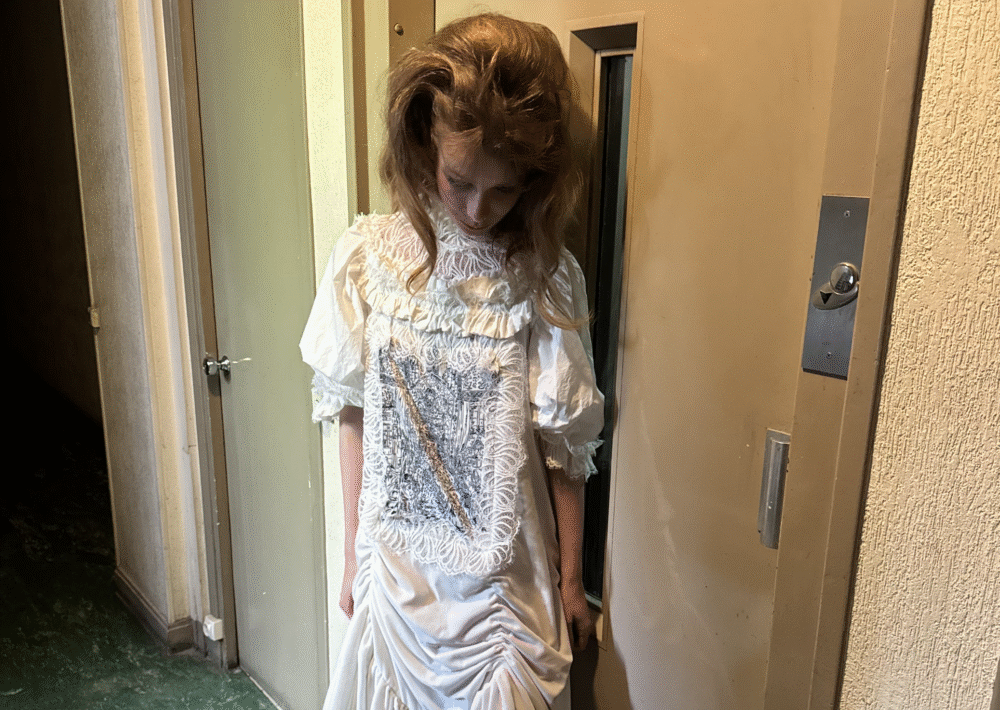
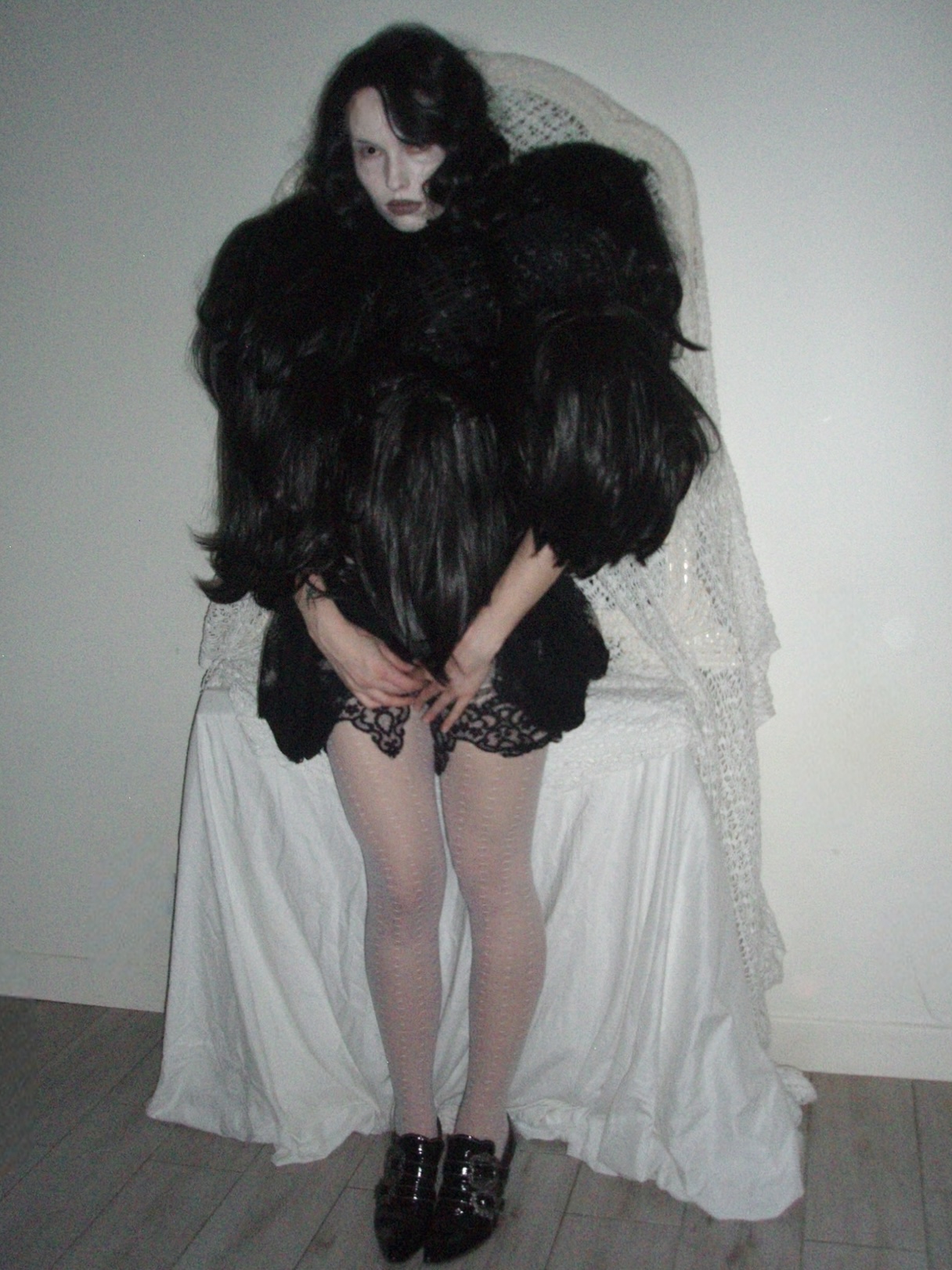
Colour, for Maya Klingelschmidt, is non-negotiable. “I can actually be quite psycho-rigid about colour,” the designer admits. Material is where that control begins to loosen. If something can be sewn, attached or incorporated into a silhouette, she is willing to see what it might become. That openness has produced a visual language suspended between glamour and deterioration, a practice drawing from 1950s America, Hollywood cinema and the gothic, locating beauty at the point where polish becomes artificial and femininity begins to look threatening. Hair becomes an enveloping coat, whilst a mortuary bag is reduced to doll-like scale. Elsewhere, the designer’s 10.6-kilogram Bone Diva coat reconstructs the volume of a mid-century fur through hundreds of pale cuttlebones, making the body beneath it appear simultaneously protected, burdened and transformed.
Originally from Alsace, Klingelschmidt moved to Paris to study at the Institut Français de la Mode. Since graduating, she has moved between three distinct modes of production: the personal experimentation of her first collection, the technical and communicative demands of working within a fashion house, and custom stagewear for artists including PinkPantheress, COBRAH, Molly Santana, Miss Bashful, Mila Degray and long-term collaborator DeathbyRomy.
Each of these practices requires a different negotiation between image and body. Klingelshmidt’s personal work can privilege narrative over wearability; a performer’s garment must survive movement, lighting and the camera; albeit in both, clothing operates as a mechanism for altering presence, and a means of embodiment for those prepared to be seen as strange, excessive or intimidating.
We spoke with the designer about instinctive construction, the usefulness of discomfort and the attitude that holds her evolving body of work together.
LIMINUL: You are originally from Alsace and moved to Paris to pursue fashion. What were your earliest encounters with clothing, cinema or image-making? When did designing begin to feel like a possible life?
Maya Klingelschmidt: I’ve always been drawn to creative things, storytelling and performance, but I don’t think I had a very clear idea of becoming a designer when I was younger. I was mostly very curious and easily obsessed with different things.
In middle school, I became interested in horror films, and later I studied design and applied arts. That gave me a way to explore all these interests in a more concrete way. Fashion became the place where all of those things could come together.
I don’t remember one specific moment when I decided this was what I wanted to do. It just became more and more obvious while I was studying and making things.
LIMINUL: Since completing your studies at the Institut Français de la Mode, you have launched your first collection, created custom work for performers and worked within a fashion house. How have those experiences shaped the practice you want to build?
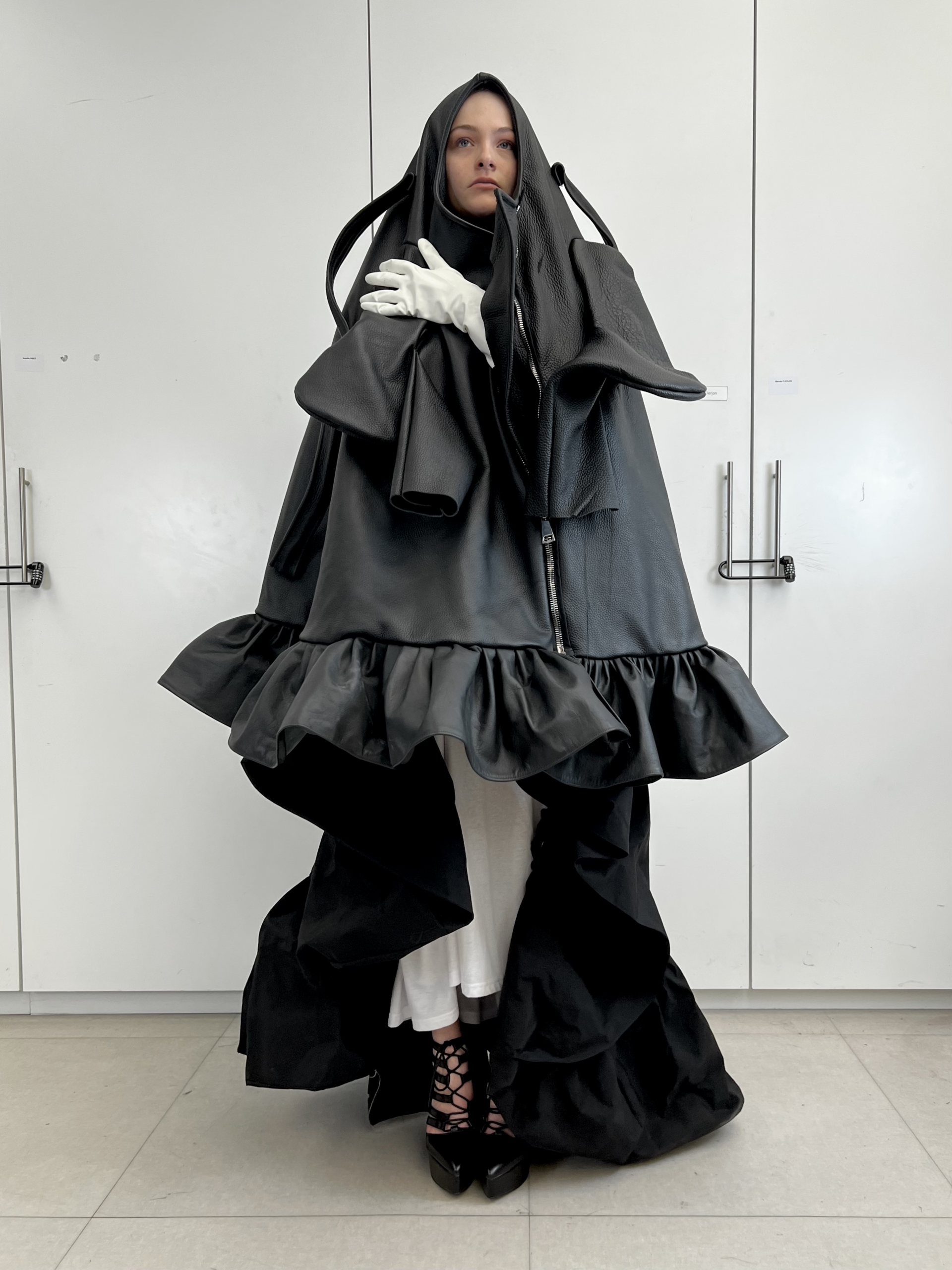
Maya: My collection was probably the most experimental thing I’ve done so far. I was able to work with large volumes and unusual materials. It is also probably my most personal project because the story came before thinking about whether the clothes were easy to wear.
Working on custom pieces for performers taught me something different. I sometimes have to step outside my own habits and think about what will work for another person, their image and what they need from the garment.
Working in a fashion house was another kind of experience. It taught me a lot about communicating ideas and research, but also about finding unexpected technical solutions when something isn’t working in the construction or sewing. I think it made me much more adaptable, which is something I’m still learning.
LIMINUL: Where does a garment usually begin for you: with a material, an image, a character, a narrative or something more instinctive?
Maya: My process is quite instinctive, especially in the beginning. The first ideas for a silhouette usually come from whatever I’m obsessed with at the time, or from references I already have in my head.
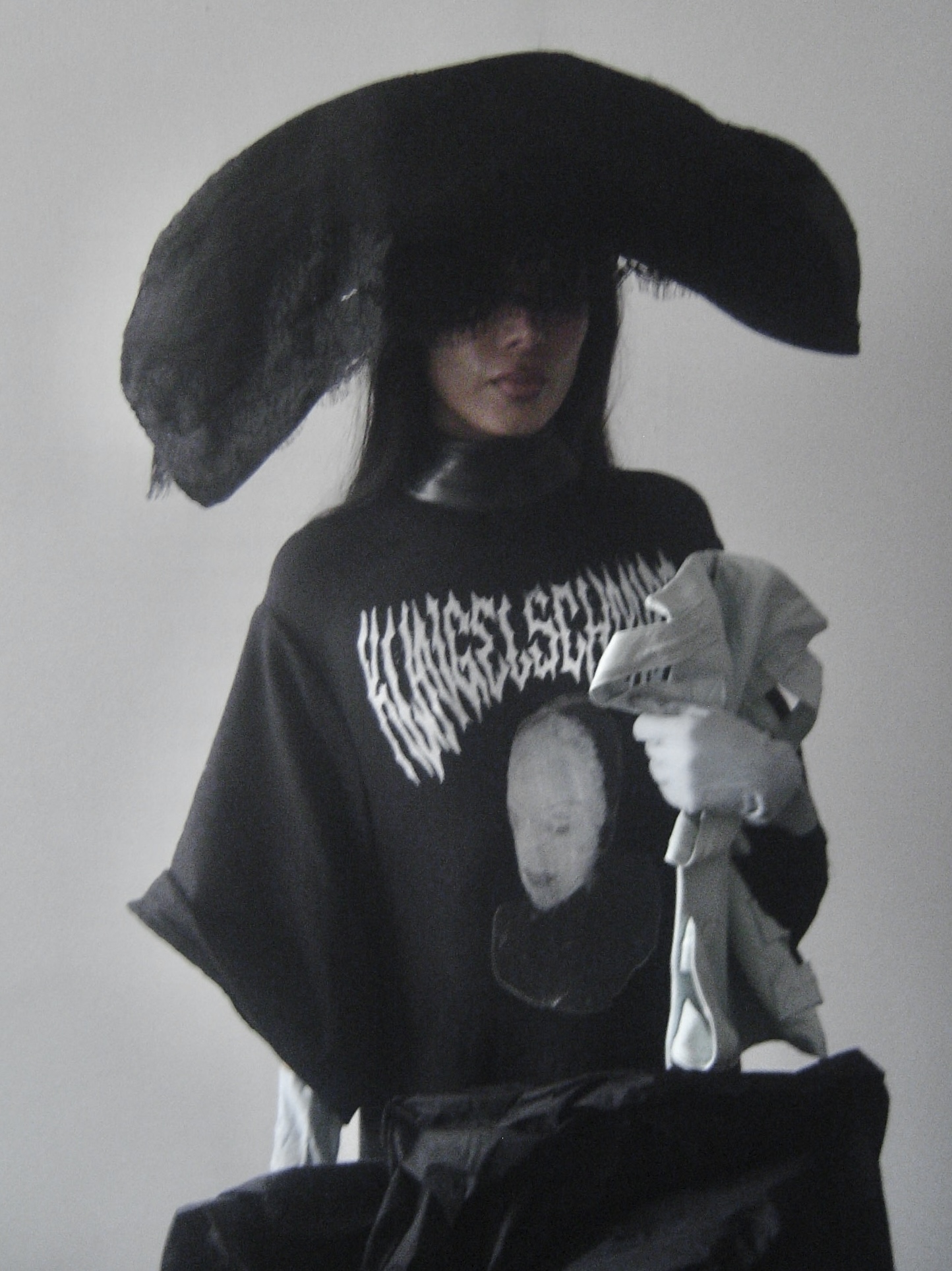
For colours and materials, I often just go to fabric stores and see what catches my attention. I can actually be quite psycho-rigid about colour. With materials, I’m much more open to experimenting. If I can find a way to sew something or incorporate it into the construction, I’ll probably try it.
I understand a lot of things through making rather than planning everything beforehand.
LIMINUL: You describe your work as rooted in the tension between glamour and decay, drawing from 1950s America, Hollywood culture and gothic and macabre imagery. What do you find beautiful that others might consider ugly, disturbing or excessive?
Maya: I don’t really know if I can explain why I find certain things beautiful. A lot of it probably comes from things I was already attracted to when I was younger. At the time, I didn’t necessarily think they were connected, but looking back, I can see that many of the same things became part of my visual language.
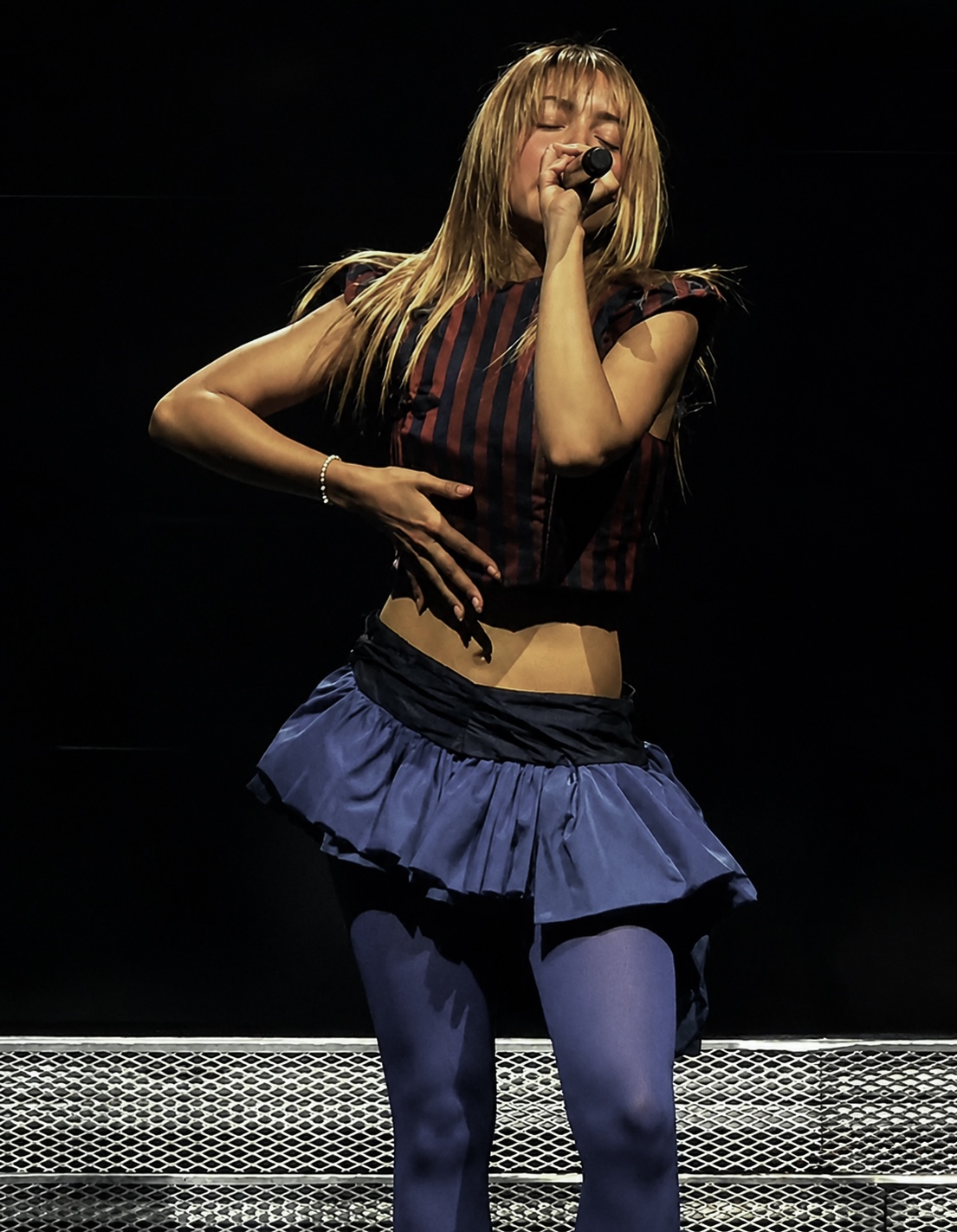
My idea of beauty is still changing. I’m still discovering things and changing my mind, so I don’t think I have one fixed definition of what beauty is yet.
LIMINUL: Hitchcock and David Lynch appear among your cinematic influences. How do you translate suspense, artificiality or psychological unease into a garment?
Maya: Materials are probably the most direct way for me to create that kind of feeling. I like trying to move away from the traditional materials you normally see in ready-to-wear and experimenting with things like plastic, hair or other unusual materials.
I also think a lot about posture and attitude. The person wearing the garment almost becomes a kind of muse for the look because their presence is part of the image too.
I would say it is about trying to create a similar sense of tension or unease through the material, the silhouette and the attitude.
LIMINUL: When you create personal work, who do you imagine inhabiting it?
Maya: I don’t really make clothes for everyone. I think I naturally speak more to people who feel a little outside what is considered conventional, or who aren’t afraid of being seen as a bit strange.
I want the clothes to make them feel empowered and confident, but I also like the idea that they can make someone look a little intimidating.
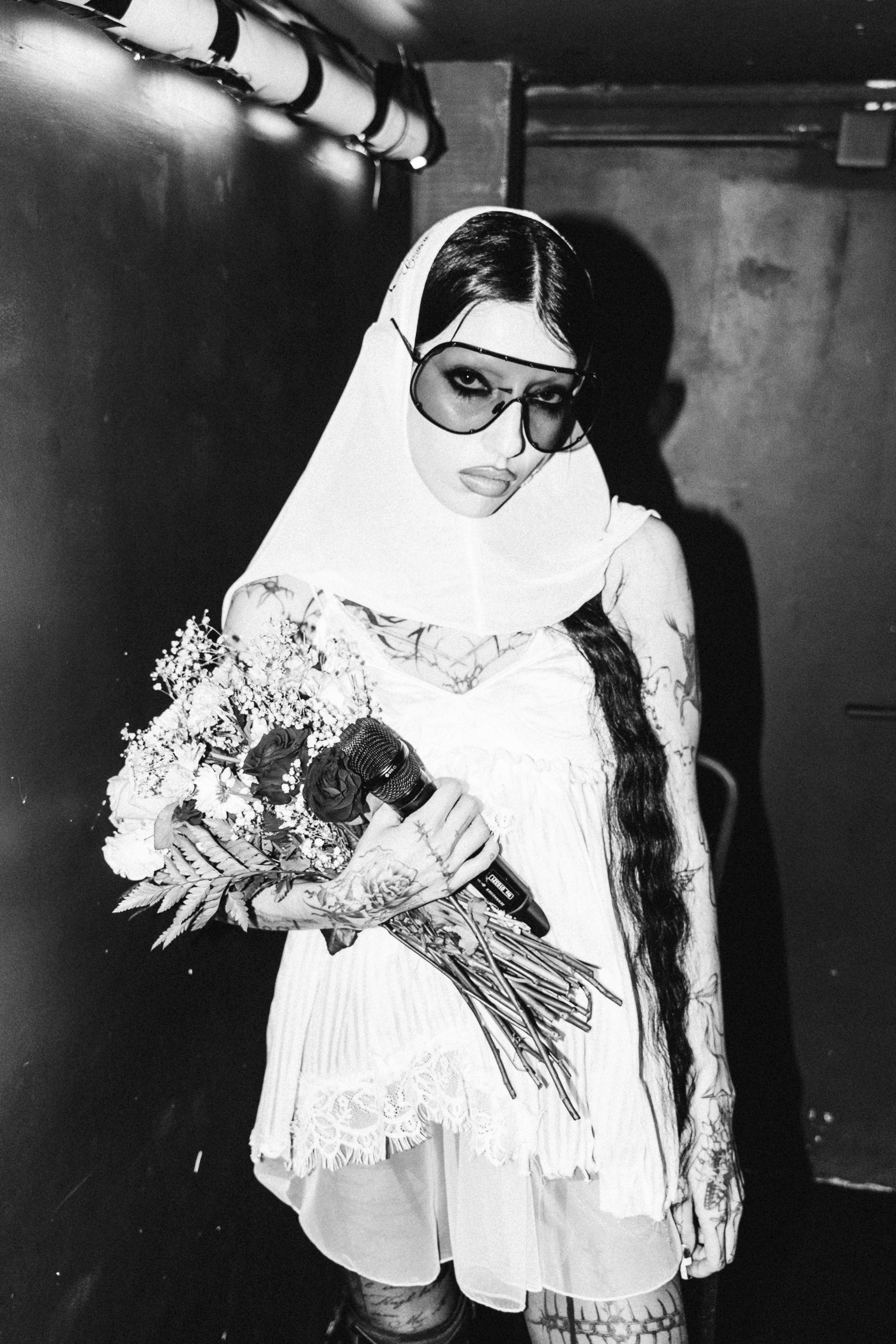
There isn’t one specific character I have in mind. It is more like a certain attitude that keeps coming back in my work.
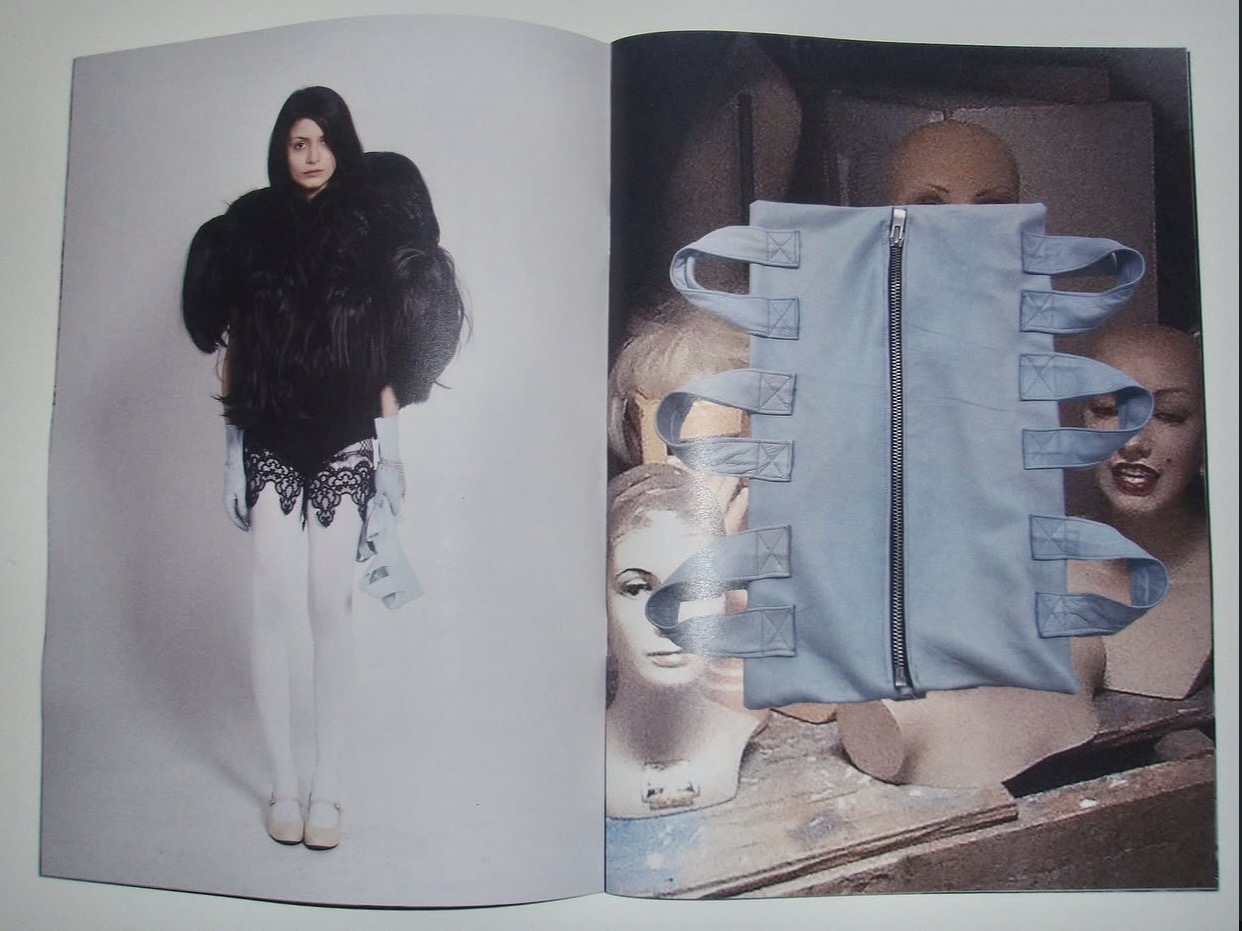
LIMINUL: The Bone Diva coat, Wigcoat and Mortuary Doll Bag transform unconventional materials and imagery into objects of fashion. How important are weight, discomfort and physical transformation to your work?
Maya: Some of my more experimental pieces are definitely not very comfortable, but I don’t see discomfort as the goal. They aren’t meant to be everyday clothes. They are more about carrying an idea or creating a particular image.
In those cases, discomfort can become part of the experience because it changes the way the person moves or even the way they hold their body.
But I don’t think discomfort automatically makes a garment more interesting. It only matters when it serves the piece.
LIMINUL: You have created custom looks for DeathbyRomy, PinkPantheress, Molly Santana, COBRAH, Miss Bashful and Mila Degray. How do you enter a performer’s visual world without losing your own identity?
Maya: I usually choose to work with artists whose visual worlds already have something in common with mine, so I don’t feel like I’m starting from a completely different place. It is more about finding where our ideas meet.
The technical side can sometimes change the original idea. Movement, lighting, the camera or the stage can affect how a garment needs to work, and sometimes that means making something less extreme than I first imagined.
But because it is stagewear, there are also moments when I can push an idea much further than I would with ready-to-wear.
LIMINUL: Many of your pieces are singular, technically demanding and created for specific performers or images. How do you build a viable long-term practice without flattening what makes the work distinctive?
Maya: The artists I work with are always coming with different projects, so there is already a natural change from one collaboration to another. My own work is evolving too.
I don’t want having a recognizable style to mean I have to keep doing the same thing repeatedly. I think my point of view can still be there even if the materials, silhouettes or projects change.
What is missing at the moment is perhaps seeing more emerging and smaller brands instead of always the same big names. There are many interesting things happening that don’t always get seen.
I really enjoy contributing to an artist’s project and helping build its visual side. I’d like to keep doing that while allowing my own work to evolve in different directions.
LIMINUL: What are you currently obsessed with that has nothing to do with fashion?
Maya: Honestly, I’ve been quite busy recently, so I haven’t had much time for other interests.
I listen to a lot of music when I want to disconnect, although I guess music is still quite connected to my world. I’ve been listening to a lot of Molly Santana, and I can’t wait to hear her upcoming album. At the moment, I’m also listening to Deftones, Che, and quite a lot of punk, goth and metal.
I’m also very excited for Halloween. Although, to be honest, it is kind of Halloween all year round at my place anyway.
Cody Rooney is the Editor in Chief and senior contributor at liminul.
He is a PhD candidate, digital content specialist, writer, editor, multi-media artist, and photographer.