
Design is often asked to imagine the future. Rarely is it asked to remember. This Pride Month, Yabu Pushelberg is transforming its Tribeca studio into something altogether different. Running from June 19 through July 18, Don’t Stop. Stand Up! brings together photography, archival material, contemporary art, and public programming to trace the intertwined histories of queer liberation, HIV/AIDS activism, and the ongoing global effort to end AIDS as a public health threat by 2030. Developed in partnership with UNAIDS, the exhibition marks the internationally renowned studio’s first collaboration with the United Nations.
Rather than positioning HIV/AIDS as a historical event safely contained within the past, Don’t Stop. Stand Up! argues that remembrance remains an active political practice. Medical advances have transformed the realities of living with HIV, yet stigma, inequality, and uneven access to care continue to shape lives across the globe. The exhibition asks visitors to consider not simply what has changed, but what remains unfinished.
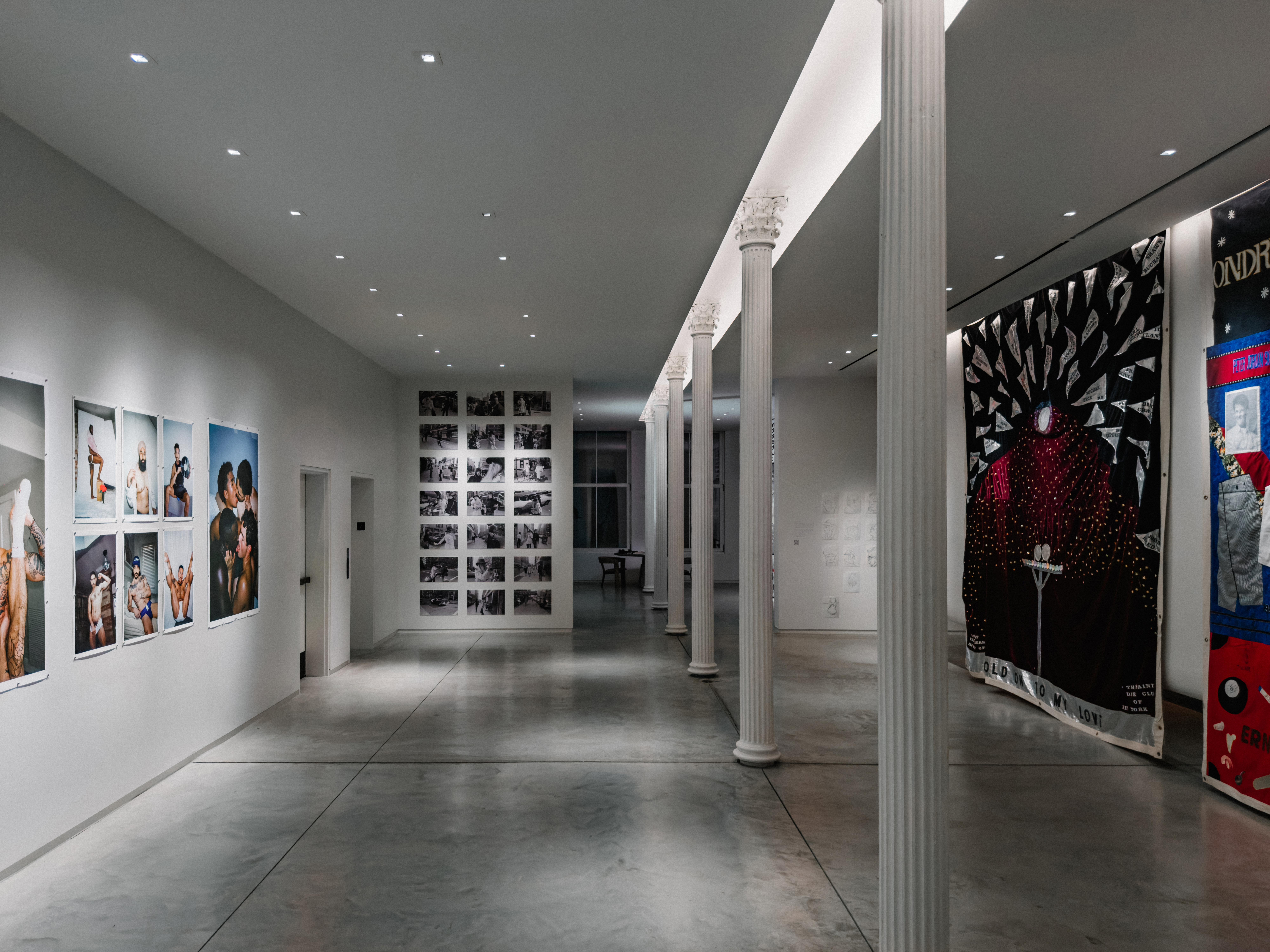
Rather than unfolding as a linear chronology, the exhibition moves fluidly between liberation, loss, remembrance, and renewal. The four presentations speak to one another across decades, revealing queer history not as a sequence of isolated moments but as an ongoing negotiation between visibility, activism, and community.
Andy, Candy, and Me presents photographs from Tony Mansfield’s personal archive documenting New York’s creative underground during the 1970s. Featuring Andy Warhol, transgender icon Candy Darling, members of The Factory, and Jackie Curtis’ legendary mock weddings, the exhibition reconstructs the social world that emerged around one of the most influential artistic circles of the twentieth century. Rather than positioning these figures as isolated cultural icons, the photographs reveal a vibrant network of artists, performers, and chosen families whose lives and communities would soon be irrevocably altered by the AIDS epidemic. The images are not nostalgic relics so much as records of a culture defined by experimentation, creative freedom, and collective belonging.
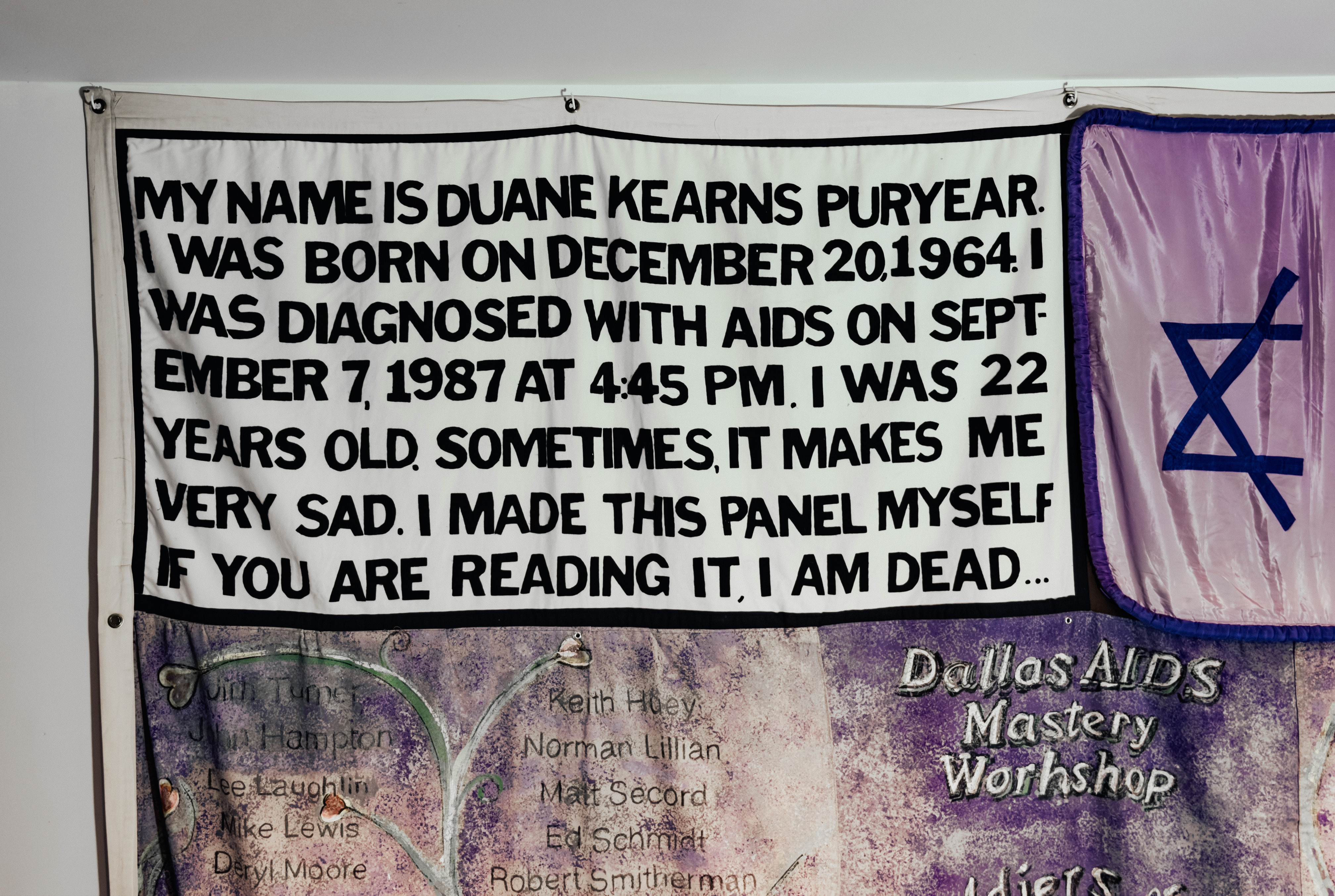
That sense of historical continuity shifts into AIDS Is Not Over, where selections from the AIDS Memorial Quilt are shown alongside archival films from UNAIDS. Considered the largest community arts project ever created, the Quilt transforms individual loss into collective memory, each hand-sewn panel standing in for a life that might otherwise disappear into statistics. Historic video works reconnect those histories to the present, reminding visitors that while the epidemic may have faded from mainstream conversation, it has not disappeared.
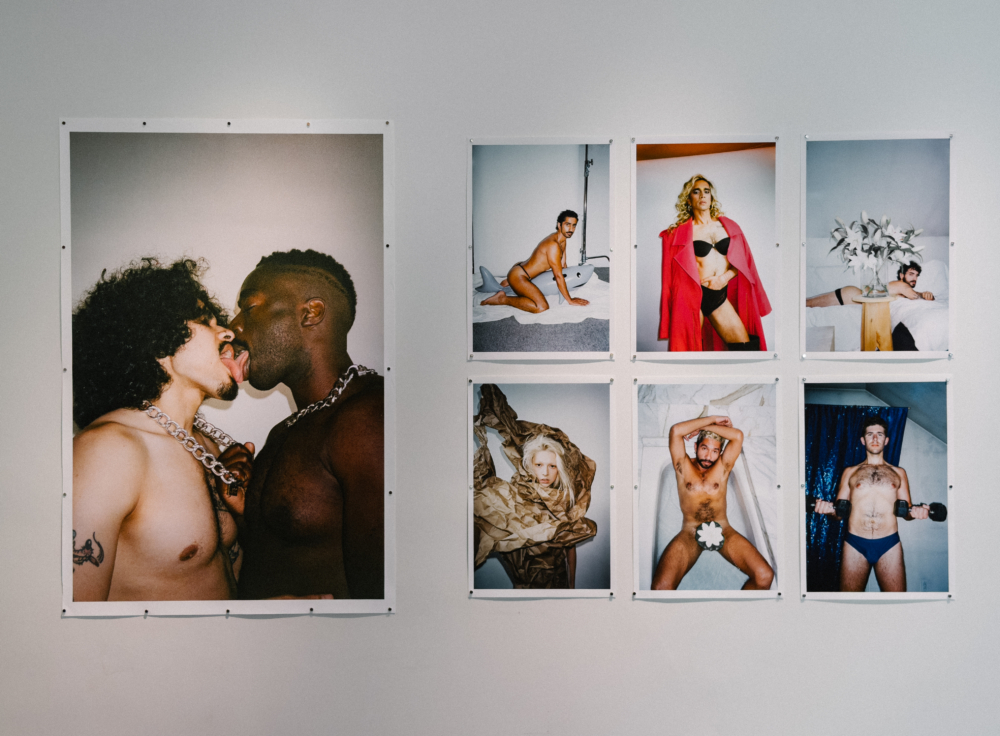
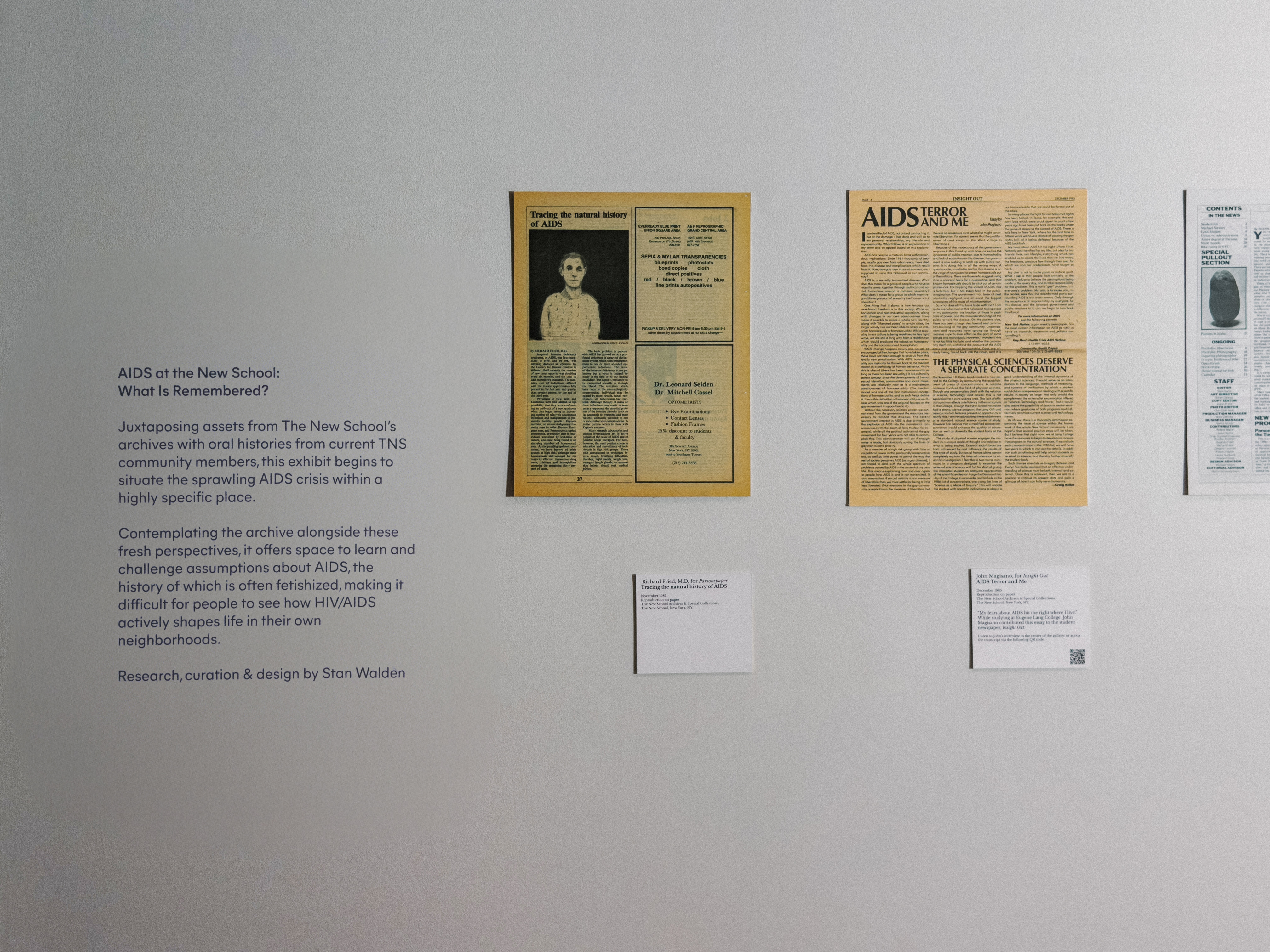
Historical reflection continues through AIDS at The New School: What is Remembered?, curated by Stan Walden, which juxtaposes archival material with contemporary perspectives to examine how institutions preserve, and sometimes overlook, the communities that shaped them. Completing the exhibition, Christopher Sherman’s photographic series Your Shame Bores Me turns toward the present, exploring contemporary queer identity through portraits that reject shame in favour of visibility, agency, and self-definition. Together, the exhibition refuses to separate past from present, instead demonstrating how remembrance continues to shape contemporary queer identity.
What ultimately distinguishes Don’t Stop. Stand Up! is its refusal to separate cultural production from political action. Throughout the exhibition’s month-long run, Yabu Pushelberg’s Salon Series brings together artists, designers, activists, public health leaders, and members of the creative industries for conversations examining HIV advocacy, queer leadership, PrEP, U=U, and the work still required to end the epidemic. Rather than functioning as supplementary programming, the discussions extend the exhibition’s central premise: memory alone is insufficient without continued engagement.
That philosophy is perhaps best articulated by founders George Yabu and Glenn Pushelberg, who describe the project as a response to the quiet disappearance of HIV/AIDS from public consciousness. While treatment has transformed countless lives, they argue that stigma has remained remarkably persistent, making renewed visibility essential if the global goal of ending AIDS by 2030 is to remain achievable.
In a cultural landscape increasingly driven by speed and spectacle, Don’t Stop. Stand Up! argues for something no less urgent: that remembrance is not passive. It is a form of resistance, and perhaps one of the most enduring acts of care that design can offer.

Cody Rooney is the Editor in Chief and senior contributor at liminul.
He is a PhD candidate, digital content specialist, writer, editor, multi-media artist, and photographer.