
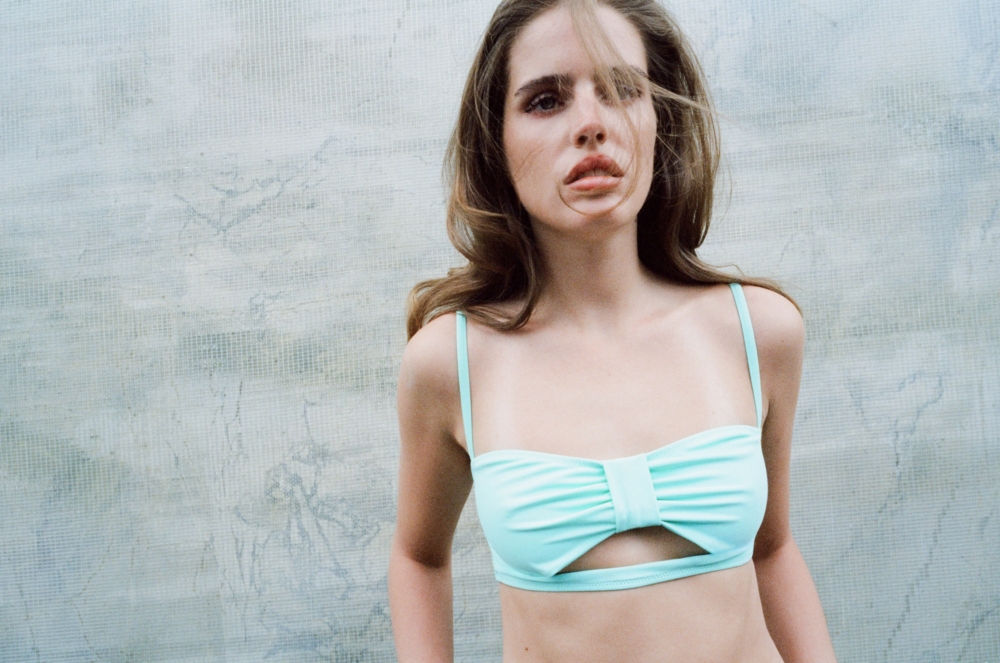
There is a particular problem that confronts any independent fashion label fortunate enough to survive its emergence: how to grow without becoming generic.
The qualities that initially make a young brand compelling: instinct, intimacy, a certain disregard for conventional wisdom, are often the same ones that become hardest to preserve once demand increases, categories expand and the operation behind the clothes becomes a business in earnest. Growth necessitates structure. Structure risks sanding down the very irregularities that made people pay attention in the first place.
Rosie Williams is aware of the tension. “Creative industries, I feel, always sit on this tightrope where they have to balance being commercially successful while still feeling special and exciting,” the Nii Hai founder tells LIMINUL.
For the London label, that balancing act has become increasingly pertinent. Founded by Williams in 2019, Nii Hai is now moving through a period of conspicuous expansion: a growing international presence, a growing footwear offering, a recent collaboration with New York fashion and cultural hub Café Forgot and, this summer, Capsule 023 Drop 2. Yet Williams is reluctant to narrativize any of it as a dramatic reinvention. Nii Hai, she argues, is in a “constant state of evolution”, each capsule another iteration of the brand’s ongoing development.
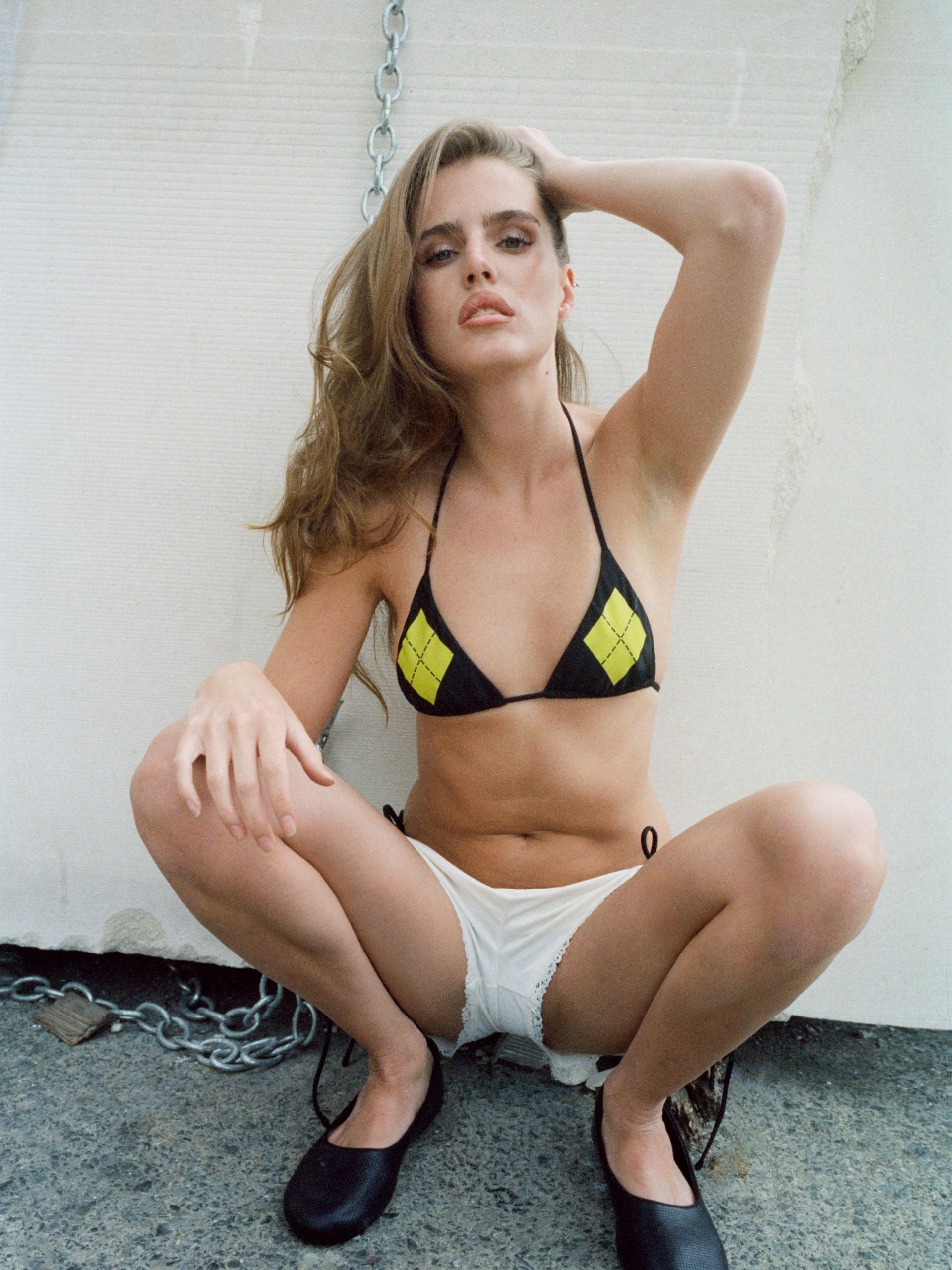
That language of gradual becoming feels instructive. Nii Hai’s appeal has never rested on an easily isolated signature. Its universe is built instead from recurring tensions: sexiness and utility; London and Mallorca; clothes that draw attention and clothes designed simply to work. Williams describes an almost intuitive internal test for what belongs: “It’s simply whether something feels like us or it doesn’t.”
The process remains strikingly close to the people actually making the clothes. Samples circulate through the Nii Hai office. Team members try them on. The fundamental question is refreshingly unsophisticated: Would you actually wear this? Williams and her team, she says, are effectively their own target customer. It is an increasingly unusual proposition in a fashion economy where the distance between designing a garment and designing an image of one can become difficult to locate. Trends are born, consumed and exhausted at the velocity of a feed; aesthetic codes that once cohered around subcultures or scenes can now circulate globally before their original contexts have even had time to register.
Williams isn’t interested in pretending Nii Hai exists outside that machinery. “It’s almost impossible not to be surrounded by fast-moving trends and aesthetics now,” she says. The distinction lies in what the brand elects to do with them. Newness is welcome, but only once it passes through the existing logic of Nii Hai. And while the fashion cycle continues to accelerate, Williams sees a surprisingly practical shift occurring in what women want from clothing.
Versatility, she argues, has become newly important. Women’s lives move between contexts continuously; the clothes need to move with them. A piece should survive a suitcase, change register through styling and function across more than one version of the day. But pragmatism alone is insufficient. “I also think people are looking for a bit more fun,” she says. “Considering everything happening in the world, having clothes that bring a sense of playfulness into everyday life feels more important than ever.”
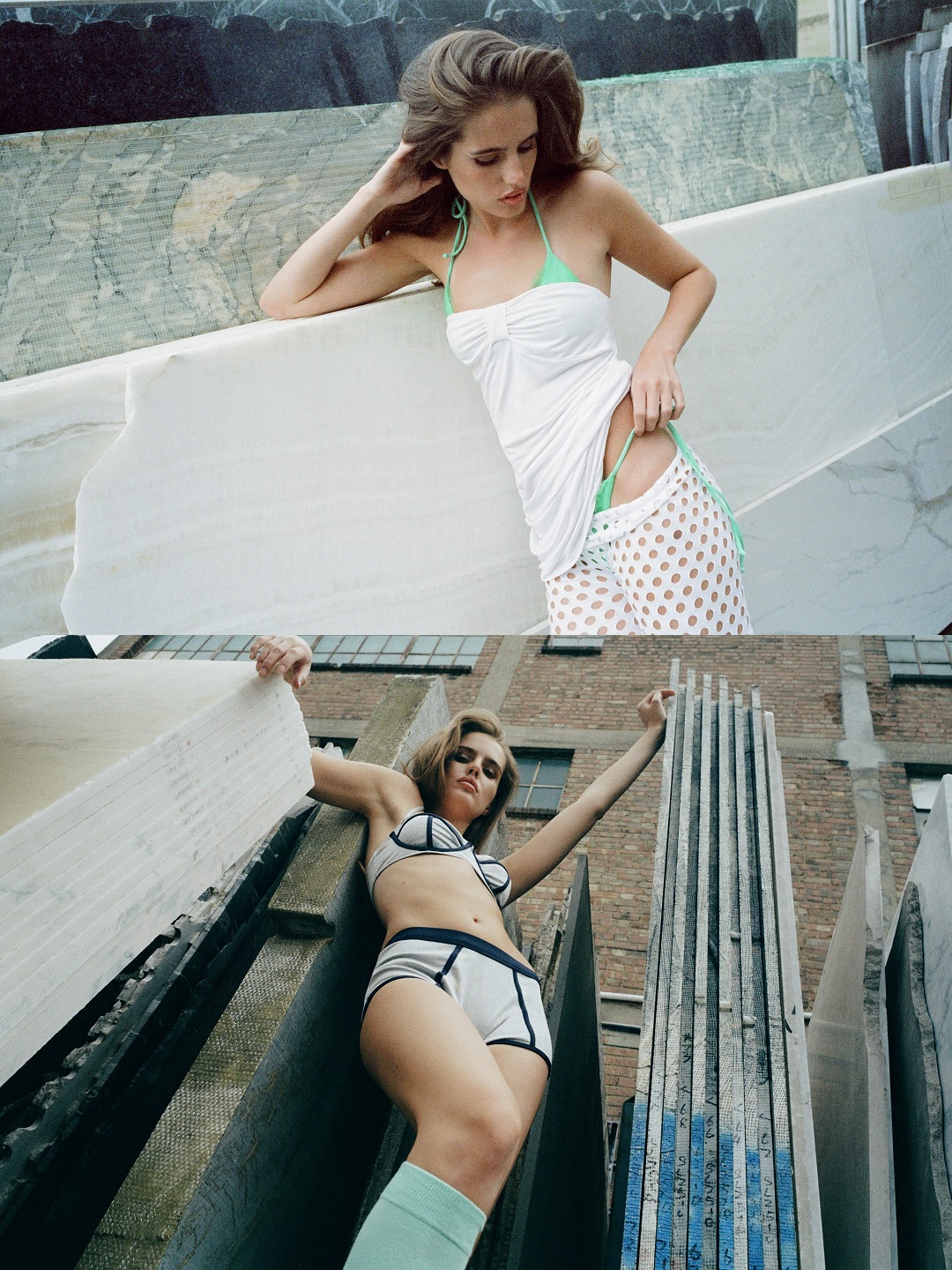
Capsule 023 Drop 2 makes the proposition literal. Swimwear allows Williams to loosen the rules: familiar silhouettes become surfaces for colour, embellishment and rhinestones. The category is also autobiographical. Williams grew up in Mallorca, where summers were spent in bikinis, and she describes designing swim as almost instinctive, less an exercise in imagining a customer than remembering what she herself wants to wear.
That collapsing of designer and wearer may be one reason Nii Hai has managed to evolve without undergoing the conspicuous “maturation” that so often afflicts young labels. Williams is no longer the 22- or 23-year-old who began building the brand, but neither are many of the women who first discovered it. “The girls who discovered the brand when I was 22 or 23 have grown up alongside me,” she says. “That’s something you can’t manufacture.”
Perhaps that is the more interesting model for longevity: not attempting to indefinitely preserve the desires of youth, nor abandoning them in pursuit of respectability, but allowing a sartorial language to grow alongside the people who speak it. For Nii Hai, growing up does not mean becoming less itself. It means finding out how much larger that self can become.
Capsule 023 Drop 2 arrives at what feels like a significant moment for Nii Hai, following the Café Forgot collaboration and continued international growth. Does this feel like the beginning of a new chapter for the brand?
I think we’re in a constant state of evolution. Every capsule is its own little chapter for the brand and another step towards becoming more Nii Hai. We’re always improving, refining and building.
Right now feels like a particularly exciting moment because the team and I are having so much fun with what we’re creating, and I think that excitement naturally comes through in the work.
Where did Capsule 023 Drop 2 begin? Was there a particular image, feeling, place or question that set the collection in motion, and where did you find yourself pushing Nii Hai in new directions?
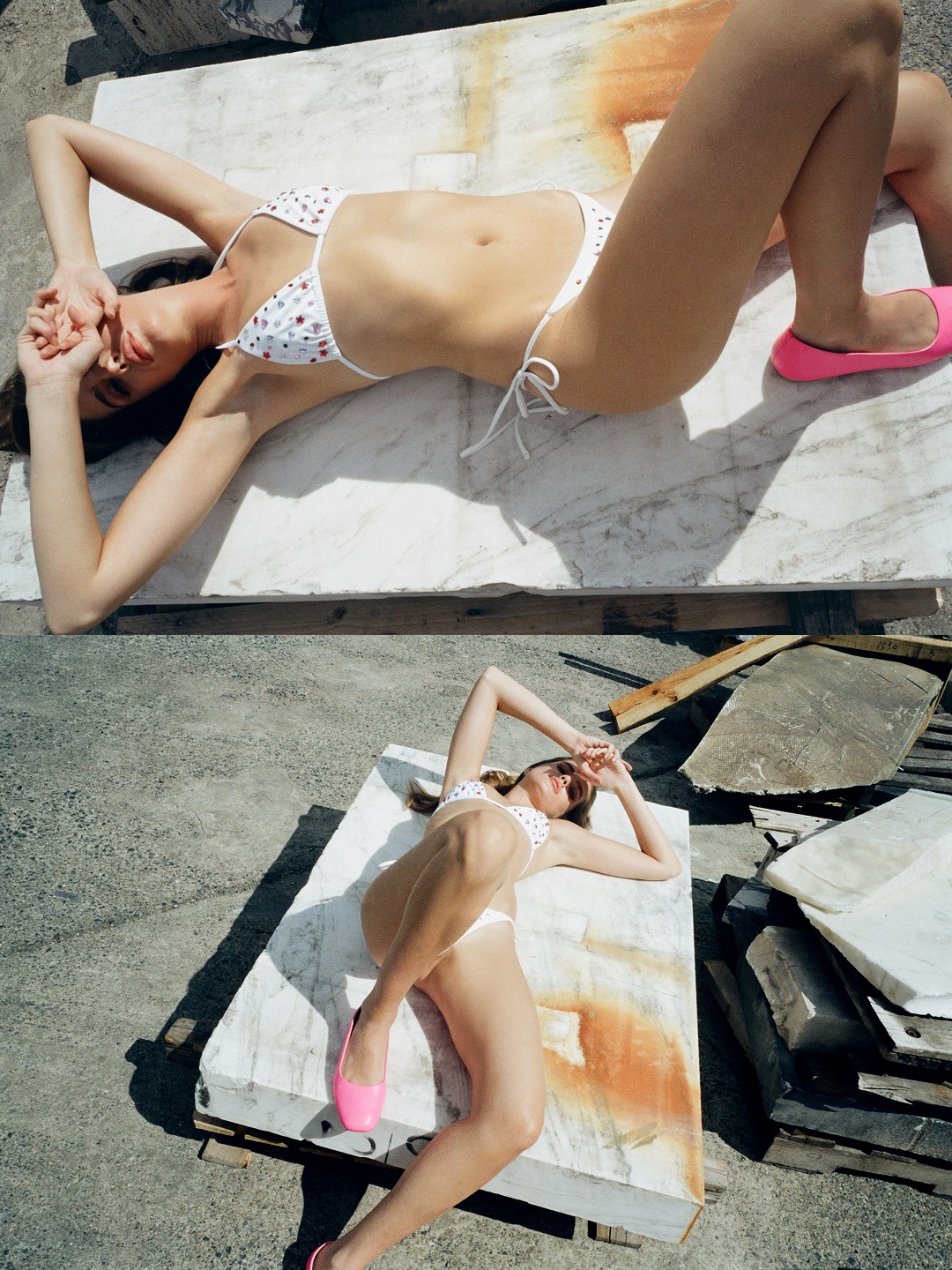
Swim has always been the category where we can be a little more playful from a design perspective. We take relatively simple shapes that we know fit well and experiment with prints, colours and embellishments. Our butterfly bikinis were so popular, so adding loads of crazy rhinestones this season felt right and super fun.
Swim has always felt very personal to me because I grew up in Mallorca, where I spent most of my summers in a bikini. I feel like I genuinely know what I want to wear, so designing swim comes very naturally.

Rather than presenting isolated collections, Nii Hai feels like a world that gradually expands through each capsule. How do you decide when something belongs within that universe, and when it’s time to introduce a new idea?
It’s actually a very natural process. There isn’t a formal decision-making framework; it’s simply whether something feels like us or it doesn’t.
As the brand evolves, some details grow into becoming part of our identity while others come and go. This is kind of what builds the brand and keeps it feeling alive. We have very clear brand pillars, so even when we’re exploring new ideas, everyone on the team instinctively knows what feels like Nii Hai and what doesn’t.
Your recent collaboration with Café Forgot brought together two brands known for cultivating highly engaged creative communities. What made that partnership feel like the right conversation for Nii Hai, and what did the collaboration make possible that might not have happened otherwise?
We’ve always loved Café Forgot, both personally and professionally. I actually walked into the store not long after starting Nii Hai and introduced myself. I remember saying, “Hi, I’m Rosie, I’ve just started a brand and I’d love to work with you.” So it’s funny that years later we are so close.
To me, Café Forgot has always been the hub for some of the coolest girls in New York, so we were naturally drawn to it. Lucy and Vita have such an incredible eye for curating brands, and after our first pop-up there we realized how closely our communities aligned. There was a genuine connection between us, and it felt like a collaboration that happened very organically.
Fashion often reflects broader cultural moods. What do you think clothing is responding to right now? What desires, anxieties or shifts in everyday life do you see emerging through the way women are dressing, and where does Nii Hai fit within that conversation?
Personally, I think women want versatility more than ever. Women’s lives are increasingly busy and constantly changing throughout the day, and I think I’ve subconsciously designed Nii Hai around that, myself included. I love creating pieces that can be dressed up or down, styled in different ways and fit into a suitcase.
I also think people are looking for a bit more fun. Considering everything happening in the world, having clothes that bring a sense of playfulness into everyday life feels more important than ever. That’s always been part of Nii Hai’s DNA.
We’re living through a moment where ideas and aesthetics circulate faster than ever, often becoming detached from the communities that first shaped them. As an independent designer, how do you maintain a distinct point of view in an environment where inspiration moves almost instantly?
It’s almost impossible not to be surrounded by fast-moving trends and aesthetics now. For us, having strong brand pillars gives us a clear foundation. We also aren’t afraid to embrace something new, but only if it makes sense within our world.
We have a very clear idea of who the Nii Hai girl is, so that keeps our point of view consistent. It also helps that everyone on the team, myself included, is genuinely our target customer.
Design is very collaborative in our office. Samples are constantly being passed around, with everyone trying them on and asking, “Would you actually wear this?” Those conversations are often what shape the final product.

As Nii Hai continues to grow internationally, what has become more challenging about leading the brand today than when you first launched it, and how do you navigate that while preserving the sense of intimacy and discovery that first drew people to Nii Hai?
Creative industries, I feel, always sit on this tightrope where they have to balance being commercially successful while still feeling special and exciting. But we’re certainly not the first brand to face that challenge, and there are plenty of businesses that have shown it’s possible to achieve both.
For us, it’s about growing steadily and making sure every part of the business supports the others, from product and quality to marketing and the team behind it all. We’re focused on making genuinely great clothes rather than simply chasing products that perform well on Instagram.
I also think there’s a real honesty to Nii Hai because we’re designing clothes for ourselves. The girls who discovered the brand when I was 22 or 23 have grown up alongside me, and that’s something you can’t manufacture. As my taste evolves and matures, that naturally trickles down into the brand.
I love speaking directly with our customers and understanding what they’re enjoying and what they want next.
Looking ahead, what feels most exciting about this next chapter of Nii Hai, and what should we be watching for over the coming year?
I think it’s really about continuing to evolve what we’re already doing, constantly improving, refining and becoming even more proud of the work we’re putting out.
We’re still a very small team, and I’m incredibly proud of what we’ve built together and how much we’re able to produce. Of course, there are things we’ve always wanted to do, like designing a bag or creating a large-scale collaboration with another brand.
There’s still so much to come and so much room to grow. I am still excited and having so much fun.

Cody Rooney is the Editor in Chief and senior contributor at liminul.
He is a PhD candidate, digital content specialist, writer, editor, multi-media artist, and photographer.